ZuriQ seed funding reaches $25.5M for 2D trapped-ion chips
ETH Zürich spinout ZuriQ raised $25.5 million to scale a 2D trapped-ion quantum chip architecture built with Infineon.
By Ingrid Halvorsen · Venture Capital Reporter
· 3 min read
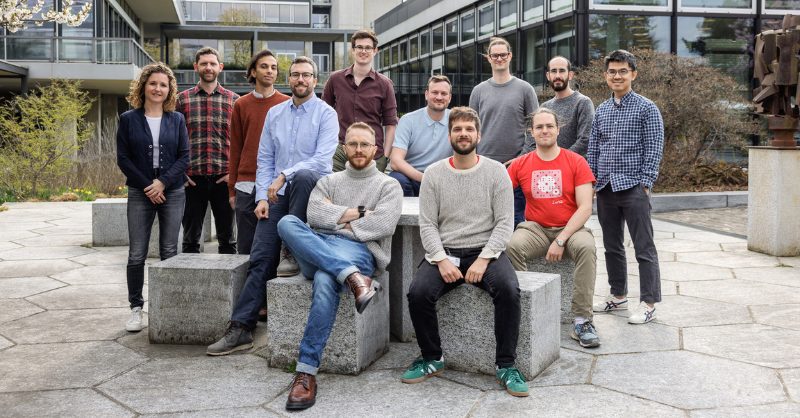
ZuriQ raised $25.5 million in seed funding to build out its two-dimensional trapped-ion quantum chip technology, putting a fresh European contender up against better-funded quantum companies including IonQ and Quantinuum. The ZuriQ seed funding was led by Quantonation, with Forward.one, Extantia, Firgun Ventures and existing backers also participating.
The Zürich-based company did not announce a valuation. The round follows a $4.2 million pre-seed in 2025 and brings ZuriQ’s disclosed funding to $29.7 million.
ZuriQ was spun out of ETH Zürich and founded in 2023 by Pavel Hrmo, Tobias Sägesser and Shreyans Jain, who worked in Professor Jonathan Home’s lab. Hrmo, the company’s co-founder and chief executive, said the new capital will support hiring, research and work toward industrial applications. The company has grown from four employees to 18 since its pre-seed round, including hires from IonQ, Xanadu and Hamamatsu.
What is ZuriQ building?
ZuriQ is developing trapped-ion quantum processors that arrange ions in two dimensions rather than in one-dimensional chains. Trapped-ion systems use charged atoms as qubits, and the design of the trap matters because scaling useful machines requires controlling many more qubits than current systems can reliably handle.
Most trapped-ion computers, including systems from IonQ and Quantinuum, use linear chains and then rely on junctions to connect those chains into larger configurations. ZuriQ says its Penning micro-traps use a static magnetic field instead of the oscillating electric fields used in conventional approaches, allowing ions to move in two dimensions without junctions.
Home, who serves as a scientific adviser to ZuriQ, has argued that moving from a line to a two-dimensional layout changes the scaling path from adding ions sequentially to growing capacity with chip area. ZuriQ’s current demonstrator, built over 18 months, controls a three-by-three array of nine individually addressed ions.
Why does the Infineon connection matter?
ZuriQ is already fabricating chips with Infineon, which the company presents as evidence that its design can be made with established semiconductor processes. That is relevant in quantum hardware, where many promising designs still depend on lab fabrication that may not transfer cleanly into repeatable production.
The company said the seed round will help it expand chip fabrication and work toward putting hundreds of qubits on a single chip. It has not yet shown that scale publicly, and the broader field has not settled which architecture can reach the thousands of qubits expected to be needed for industrial applications.
Quantonation, the Paris-based quantum investor that led the round, has previously backed companies including Pasqal and Diraq. Founding partner Christophe Jurczak said the quantum computing race has not been decided and pointed to ZuriQ’s scientific team and ability to recruit talent as reasons for the investment.
The competitive bar is high. IonQ has acquired Oxford Ionics in a £1.075 billion deal, while Quantinuum has filed for a Nasdaq IPO at a valuation of up to $20 billion. McKinsey has estimated quantum computing could become a $1.3 trillion industry within a decade, but that projection depends on technical progress that no hardware camp has yet fully delivered.
This story draws on original reporting from TechFundingNews.