UNIT AI funding brings in $12M for modular warehouse automation
UNIT AI raised $12 million from Prologis Ventures, Dynamo Ventures and others to sell warehouse robotics to retailers and 3PLs.
By Ingrid Halvorsen · Venture Capital Reporter
· 3 min read
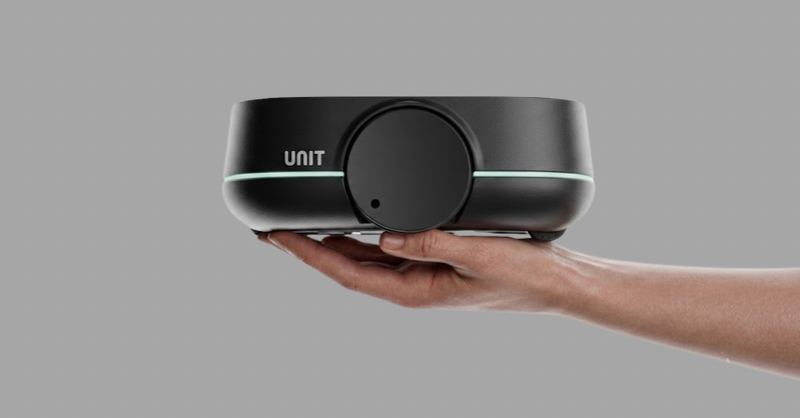
UNIT AI funding has reached $12 million as the Boston physical AI startup builds a modular warehouse automation system for retailers and third-party logistics providers that cannot justify large facility overhauls. The round was co-led by Prologis Ventures, Dynamo Ventures and Ground Up Ventures, with participation from eGateway Capital, Recursive Ventures, Think + Ventures, ZEP Fund and Crosscourt.
The company did not disclose its valuation or total funding to date. UNIT AI said the capital will go toward deployment capacity, product development and commercial expansion across North America.
UNIT AI was founded by Guy Glass and Avihou Barkay. Glass previously co-founded Caja Robotics, a goods-to-person warehouse automation company started in 2014 and acquired by Fives Group in 2025. Barkay was formerly president of Plus One Robotics and general manager at Caja Robotics.
What does UNIT AI do?
UNIT AI says its Physical AI platform automates each-level inventory management, order fulfillment and returns. The company claims its system can be installed in spaces as small as 1,000 square feet, using existing shelving and flooring rather than requiring a full warehouse rebuild.
The pitch is aimed at operators below the top tier of warehouse automation buyers. UNIT AI says its system can produce return on investment within 12 months, a claim the company did not support with disclosed customer economics, contract values or deployment costs.
After 22 months, UNIT AI lists Barrett, ShipCalm, DaVinci and Carter as customers. It also says it works with global apparel brands and has a pipeline of retailers and logistics providers that collectively ship billions of inventory units annually. The company did not name those apparel brands or give revenue figures.
Why is Prologis Ventures backing UNIT AI?
Prologis Ventures is the investment arm of Prologis, the industrial real estate company whose warehouse customers overlap with UNIT AI’s target market. That makes the investor useful beyond the check, since Prologis has relationships with the kinds of retailers and logistics operators UNIT AI wants to sell to.
Dynamo Ventures brings logistics-sector credentials of its own. The firm was an early investor in sennder, the digital freight brokerage that reached a $1.45 billion valuation in 2021.
Glass said UNIT AI was created around the view that warehouse robotics needed to become more accessible rather than larger and more complex. Todd Lewis, senior vice president at Prologis Ventures, said retailers and 3PLs need automation that addresses operational problems without forcing a full redesign of their sites.
Where does UNIT AI fit in warehouse robotics?
UNIT AI is entering a market where funding continues to move toward several different robotics models. PHINXT Robotics in London raised more than £600,000 to build lower-cost warehouse automation in Europe. Dexory closed a $100 million Series C in October 2025 for a robot-led warehouse data platform. Smart Robotics has raised funding for picking systems, Agility Robotics went public at a $2.5 billion valuation, Brightpick raised $12 million for autonomous mobile robots, Dexterity raised $95 million for AI-powered picking robots and RightHand Robotics has raised more than $100 million from investors including GV, Menlo Ventures and Playground Global.
The broader market is expanding. Grand View Research valued global warehouse automation at $23.29 billion in 2024 and projected it would reach $54.57 billion by 2030, citing e-commerce growth, labor shortages and AI-powered fulfillment.
UNIT AI’s near-term test is execution across multiple paid deployments. Modular automation is a familiar promise in warehouse technology, and the company has not disclosed enough operating data to show whether its economics hold outside early customer sites.
This story draws on original reporting from TechFundingNews.