Simile Series B values behavioral AI startup at $2 billion
Simile raised $200 million led by Greenoaks, five months after its Series A, to build AI models that forecast human behavior.
By Ingrid Halvorsen · Venture Capital Reporter
· 3 min read
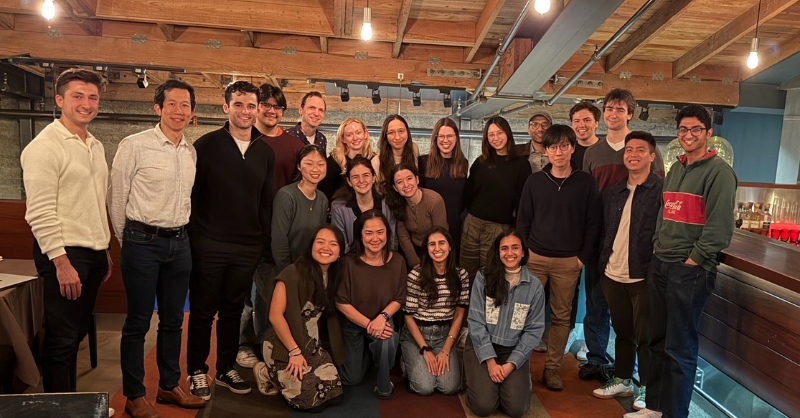
Simile raised a $200 million Series B at a $2 billion valuation, giving the Palo Alto company one of the faster early funding ramps in enterprise AI this year. The Simile Series B comes five months after a $100 million Series A and backs a Stanford spinout building foundation models meant to predict how people will respond before companies roll out products, campaigns or policies.
Greenoaks led the new round. Index Ventures increased its position, while Hanabi, Bain Capital Ventures, A*, Factory and CVS Health Ventures returned. Definition joined as a new backer. Simile did not disclose whether the $2 billion figure is pre-money or post-money, a distinction that affects ownership math in any priced round and is explained in Venture Post’s guide to pre-money versus post-money valuation.
The company said the capital will go toward training its core models, adding simulation compute capacity and building commercial engineering teams for healthcare, financial services and media customers. Simile says its total funding now exceeds $300 million in under six months.
What does Simile do?
Simile builds AI models designed to simulate human behavior for enterprises. The company says its platform can model how customers, patients, employees or citizens may respond to a proposed decision, then run those scenarios at scale before a customer spends money on a launch or pilot.
That puts Simile in a different lane from enterprise AI companies focused on search, content generation or workflow automation. Simile is pitching behavioral prediction as an input to decisions, rather than as a faster way to produce text, code or analysis. The company says CVS Health, Wealthfront, Deloitte and Gallup use its platform, and that its models have run tens of millions of simulations for Fortune 100 companies.
Simile also says it has released a product that lets organizations act on those predictions directly, rather than using the simulations only as research. The company has trained a separate confidence model to rate the reliability of each simulation, an attempt to address the obvious weakness in synthetic-user research: a simulated response is only useful if the model is well calibrated.
Who founded Simile?
Simile was founded by Joon Sung Park, Michael Bernstein, Percy Liang and Lainie Yallen, all of whom worked together at Stanford. Park, Simile’s CEO, completed a Stanford PhD advised by Bernstein and Liang. Bernstein is a Stanford human-computer interaction professor, and Liang directs Stanford’s Center for Research on Foundation Models.
The company grew out of Park’s research on generative agents, including a project in which 25 AI agents lived in a simulated town called Smallville, holding conversations and developing routines without direct human scripting. The paper, titled Generative Agents: Interactive Simulacra of Human Behavior, won the Best Paper Award at UIST 2023.
Simile was founded in late 2025 and launched publicly in February 2026. Its Series A included angel investors Andrej Karpathy, Fei-Fei Li and Adam D’Angelo, according to the company.
What the round signals
Simile says revenue has increased fivefold since its February launch and that headcount has grown to more than 50 people globally. It did not disclose current revenue, customer count, burn rate or the valuation of the prior Series A.
The round lands as enterprise AI funding continues to cluster around companies selling into specific workstreams. Glean raised $260 million at a $4.6 billion valuation for enterprise knowledge search, Harvey raised $200 million at an $11 billion valuation for legal AI workflows, and Writer was valued at $1.9 billion for its enterprise generative AI platform. Simile’s bet is that companies will also pay for models that estimate whether decisions will work before those decisions reach real users.
This story draws on original reporting from TechFundingNews.