Rime raises $24 million Series A for enterprise voice AI models
M13 led the round for the San Francisco startup, which says its speech models handle nearly 100 million enterprise calls a month.
By Ingrid Halvorsen · Venture Capital Reporter
· 3 min read
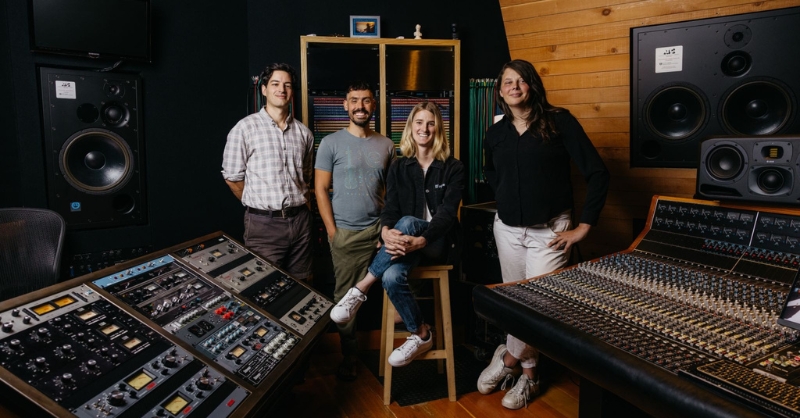
Rime, a San Francisco startup building speech-to-speech AI models, raised a $24 million Series A led by M13 to fund research and product development. The round puts fresh capital behind a company that says its voice models already support nearly 100 million enterprise phone calls each month, while competing in a heavily funded voice AI infrastructure category.
Twilio Ventures, Corazon Capital, Cadenza Ventures and Unusual Ventures also participated in the financing. M13 partner Morgan Blumberg is joining Rime’s board. The company did not disclose its valuation, revenue, headcount or the full terms of the round.
Rime was founded in 2022 by Lily Clifford, who left a Stanford linguistics PhD program to start the company, Brooke Larson, a PhD linguist and former Amazon Alexa engineer, and Ares Geovanis, a Stanford engineer. The company is building models that process and generate speech directly for real-time conversations, rather than positioning itself as another text chatbot with a voice layer attached.
Rime said its customers include Mayo Clinic, Dialpad, Upstart and Asurion. The company is selling into enterprise call flows where latency, pronunciation, domain terminology and perceived reliability are commercial issues, particularly in healthcare, financial services and customer support. Rime did not disclose how much of its call volume comes from any single customer or sector.
Voice AI funding remains competitive
Rime is raising into a market where several infrastructure companies have already attracted large checks. ElevenLabs was valued at more than $3.3 billion after its latest funding round, according to Tech Funding News. Hume AI has raised more than $100 million for emotionally oriented voice models, Cartesia recently raised $64 million for real-time speech foundation models, and Deepgram has raised more than $130 million for speech recognition infrastructure.
Grand View Research expects the conversational AI market to grow from about $17.6 billion in 2025 to more than $49 billion by 2030, driven by demand across customer service, healthcare automation, financial services and workplace software. Market forecasts are broad, and Rime has not said how much of that spend it expects to reach or how it prices its models.
The company’s pitch is that linguistic design can improve voice interactions in ways that larger models alone may not solve. Clifford said response relevance and speech appropriateness are difficult to specify and verify, adding that “there’s no unit test for sounding like you care.”
Rime also pointed to an independent Miravoice study that evaluated 12 voices from three vendors across 100,000 calls. According to that study, Rime’s voices had statistically significantly lower “Hung Up During Intro” rates than major competitors and the fastest median time to completion among providers tested. The summary did not identify all vendors in the comparison.
Rime adds a chief scientist
Alongside the funding, Rime appointed Rafael Valle as chief science officer. Valle previously led audio research at Meta’s Super Intelligence Lab and worked on audio research at NVIDIA’s Applied Deep Learning Research group, according to the company.
The Series A will be used for frontier speech research, product development, enterprise deployment and engineering hiring. Rime’s strategy appears to be focused on the modeling layer rather than owning end-user applications, a position that can make it a supplier to platforms handling regulated or high-volume conversations.
For enterprise buyers, the relevant question will be whether Rime can show better call outcomes at scale, not whether its demos sound more human. The company has disclosed call volume and named customers, but it has not yet disclosed financial metrics that would show how that usage converts into durable revenue.
This story draws on original reporting from TechFundingNews.