Belgian techbio Sightera raises €3M for patient-first AI drug discovery
The Antwerp spin-off is using resistant patient tissue to train its models before designing small molecules, starting with oncology program SIGHT001.
By Marcus Adeyemi · Startups Editor
· 3 min read
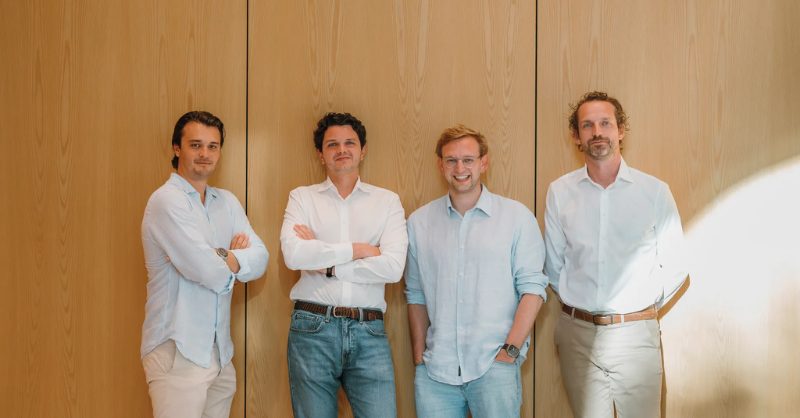
Sightera Biosciences has raised €3 million in pre-seed funding to build an AI drug discovery platform that starts with patient-derived disease biology rather than a predefined target. The Antwerp-based techbio company said the round was led by Entourage, Anacura and QBIC, with proceeds going toward team growth and its lead oncology program, SIGHT001.
The company did not disclose its valuation, revenue or headcount. Sightera was founded in 2024 as a spin-off from the University of Antwerp and Antwerp University Hospital, and is based at the Darwin Incubator in Niel, Belgium.
A biology-first pitch in AI drug discovery
Sightera’s central claim is that most AI drug discovery platforms begin with chemistry or a selected biological target, then test resulting molecules in more complex models. Sightera says it reverses that sequence by starting with samples from patients whose cancer or fibrosis no longer responds to standard treatment.
The company grows those samples into organoids and runs high-throughput drug screens to collect data on how resistant disease tissue responds to therapies. Its AI models then use those response patterns to design small molecules intended to produce a desired biological effect.
Co-founder and CEO Hendrik Vercammen said in the company’s announcement that Sightera begins with patient-derived biology and uses what it learns there to design new small molecules. The approach is still preclinical, and the company has not reported clinical efficacy data.
Sightera’s first disclosed program, SIGHT001, is a molecular-glue oncology effort. The company said the new funding will help move the program toward preclinical candidate selection. Vercammen also said Sightera is preparing a larger financing round intended to support taking SIGHT001 into clinical trials.
The team and backers
Vercammen holds a PhD in medical sciences from the University of Antwerp and has worked across translational drug discovery, AI and company-building. He co-founded Sightera with chief scientific officer Maxim Le Compte, a biomedical researcher with a PhD in oncology whose work focuses on patient-derived biology.
The management team also includes chief business officer Lars Vanlommel, whose background includes corporate finance roles at Lotus Bakeries and CMB.TECH, and chief data officer Christophe Deben, a University of Antwerp professor who established the Antwerp Tumoroid Biobank.
Entourage is a notable lead investor because the Ghent-based early-stage firm is better known for B2B software than biotech. The firm said Sightera’s appeal is its use of biology to train AI, rather than asking AI to predict biology from the outset. QBIC, another lead investor, is an inter-university spin-off fund active in Flemish biotech and medtech through ties to universities in Ghent, Brussels and Antwerp. Anacura brings life sciences operating experience, according to the announcement.
A crowded field, with different starting points
Sightera is entering a heavily funded category. Some companies, including Graph Therapeutics, are also building around living tissue and patient-derived models. Graph Therapeutics, founded by the team behind Allcyte, raised $5 million from Daphni in June for a similar tissue-based approach aimed at immune diseases.
Other AI drug discovery companies start from broad computational design platforms. Isomorphic Labs, spun out of DeepMind, raised $2.1 billion in May for a multi-disease AI drug design platform. Chai Discovery reached a reported $3.8 billion valuation after raising $400 million and pursuing a foundation-model approach to molecule design. Recursion Pharmaceuticals, Insilico Medicine and Exscientia are also cited as technology-first competitors that typically design molecules before validating them in complex disease models.
Grand View Research estimated the global AI drug discovery market at about $2.35 billion in 2025 and projected it to reach $13.77 billion by 2033. Sightera’s raise is small by category standards, but it gives the company enough capital to test whether its patient-first workflow can produce a credible preclinical asset before asking investors to fund clinical work.
This story draws on original reporting from TechFundingNews.