ORiS raises €5M to test laser power beaming between satellites
Earlybird and Pitchdrive led the Turin space startup’s pre-seed round, with a 2027 in-orbit demo planned with DCUBED.
By Marcus Adeyemi · Startups Editor
· 4 min read
ORiS, a Turin-based space infrastructure startup, has raised €5 million to develop laser systems that beam power between satellites and other receivers. The round gives the 2024-founded company early capital for a 2027 in-orbit demonstration, while better-funded U.S. rivals are pursuing related orbital power concepts with larger checks and more defence-linked backing.
The financing includes a €4.5 million pre-seed round led by Earlybird and co-led by Pitchdrive. Galaxia, Vento and Piemonte Next Fund also participated. ORiS also received a €0.5 million grant from the Piedmont Region’s startup consolidation program. The company did not disclose valuation, revenue, customer commitments or headcount beyond its founding team.
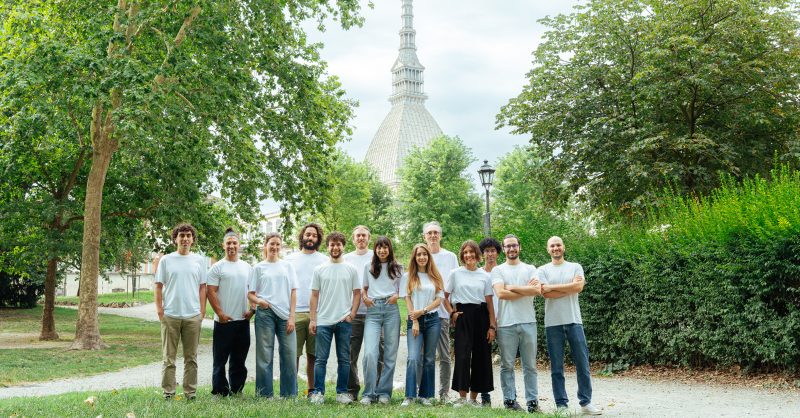
ORiS was founded by four aerospace engineering graduates from Politecnico di Torino: chief executive Andrea Villa, chief technology officer Anna Mauro, chief commercial officer Domenico Edoardo Sfasciamuro and chief operating officer Francesco Lopez. The company is supported by the I3P Incubator at Politecnico di Torino and the European Space Agency’s ESA BIC Turin program, and grew out of the CDP Venture Capital ecosystem with support from Galaxia.
Laser power for satellites remains early
ORiS says its goal is to make orbital power available on demand, reducing satellite dependence on solar panels, which degrade and cannot generate electricity during eclipses. Its proposed system would use high-powered lasers to transmit electricity between spacecraft, or from ground and airborne sources to receivers, without wires or batteries.
The company’s most developed demonstration to date is not in orbit. Its LOONA project, developed through NATO’s DIANA defence accelerator, has wirelessly sent power to a hovering drone across more than 100 metres. LOONA has also worked with Thales Alenia Space to study power delivery for lunar rovers.
Villa said ORiS wants to support growth in the space economy by changing how satellites are designed and operated, with the first step being to make energy in orbit available as a commodity. That remains a company target rather than a proven space capability.
Funding gap with U.S. rivals
ORiS is entering a field where several U.S. companies have raised more capital or secured defence support. Star Catcher Industries raised $65 million in a Series A round in May 2026 for an orbital power grid project, with backing from B Capital. Aetherflux, founded by Robinhood co-founder Baiju Bhatt, has Pentagon funding for laser power beaming from orbit to remote military sites. New Mexico-based Mantis Space raised $10 million to provide power to satellites in Earth’s shadow.
Many competitors are using microwave transmission, while ORiS is focused on lasers. The funding split also reflects a broader dual-use capital imbalance. According to analysis by AVP and Earlybird for their €500 million European defence fund, Europe accounted for 6.2% of NATO-wide defence technology venture funding in 2025, while the U.S. has secured about 85% since 2019.
Forecasts for the market are still wide. Global Market Insights estimates the space-based solar and wireless power transmission market at $790 million in 2026 and projects it could reach $3.3 billion by 2035. SNS Insider projects $10.7 billion over the same period. Microwave systems currently lead the category, while laser-based approaches such as ORiS’ remain a smaller segment.
What ORiS plans to build next
ORiS said the new money will fund technical hiring, subsystem research and development, larger lab and cleanroom capacity, and a flight model for satellite-to-satellite power transmission. The company expects that model to be ready by the end of July, ahead of a 2027 in-orbit demonstration with mission partner DCUBED to beam power over 10 metres.
Earlybird venture partner Frédéric du Bois-Reymond said orbital energy infrastructure could become a foundational capability for future space operations. Pitchdrive managing partner Koen Christiaens said LOONA gives ORiS a faster way to validate its wireless power technology while building commercial momentum.
Caltech showed in 2023 that power can be beamed through open air from orbit, and ORiS has demonstrated power delivery to a moving target on Earth. The next test is whether a small European startup with €5 million can convert those steps into a working orbital system before larger competitors or cheaper satellite design choices define the market.
This story draws on original reporting from TechFundingNews.