Lakestar closes $300 million European defence and resilience fund
The Spotify and Revolut backer has closed Lakestar Resilience I, a $300 million vehicle for defence, security and critical technology startups.
By Ingrid Halvorsen · Venture Capital Reporter
· 3 min read
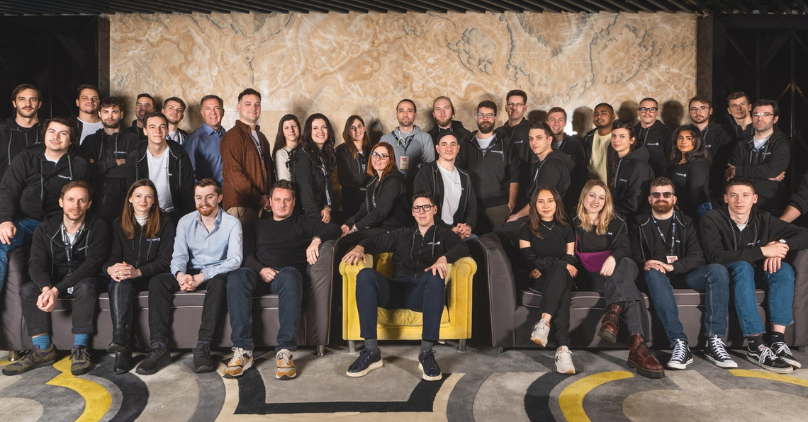
Lakestar has closed Lakestar Resilience I, a $300 million fund focused on defence, security and critical technologies, marking a sharper move by the European venture firm into a category many mainstream investors avoided until recently. Lakestar describes the vehicle as Europe’s largest privately backed institutional venture fund dedicated to defence and resilience technologies.
The firm said the fund was oversubscribed, with demand above its target. It did not disclose the target size in the announcement. The close gives Lakestar a dedicated pool of capital for a sector that has become more investable for European VCs since Russia’s invasion of Ukraine, as governments and startups push into AI-enabled military systems, autonomy, space, cyber and supply-chain resilience.
Lakestar is better known for early bets on consumer and fintech companies including Spotify, Airbnb and Revolut. Its new fund shows how far venture capital’s centre of gravity has shifted: from software that changes consumer behaviour to software and hardware aimed at state capacity, military readiness and infrastructure resilience.
What Lakestar has already backed
The fund’s portfolio includes Helsing, TEKEVER, ARX Robotics, Auterion, Isar Aerospace, Kraken Technology Group and several unnamed startups still in stealth. Lakestar said those companies have collectively raised more than $5 billion, generated several billion dollars in revenue and employ more than 5,000 engineers, researchers and defence specialists.
The named companies cover a broad slice of the European defence stack. Helsing builds military AI software. ARX Robotics develops autonomous ground vehicles. Auterion works on drone operating systems. Isar Aerospace is focused on launch capabilities. TEKEVER builds surveillance drones that, according to the company’s reported deployments, patrol the English Channel, support Ukrainian operations and work with organisations including the RAF and the European Maritime Safety Agency.
Lakestar has also formed an advisory board for the fund. Members include former NATO military leaders Sir Nicholas Carter and General Volker Wieker, former US Secretary of State Mike Pompeo and technology entrepreneur Baroness Martha Lane Fox.
Defence founders are changing
The companies drawing venture capital in European defence increasingly look less like traditional contractors and more like software-led startups. Helsing co-founder and co-CEO Torsten Reil previously studied computational biology at Oxford and built NaturalMotion, an AI animation company acquired by Zynga for $527 million in 2014. He later co-founded Helsing, which raised its first €8.5 million mainly from wealthy families rather than institutional investors, according to the reported company history. Helsing is now valued at about $18 billion.
TEKEVER followed a different route. Ricardo Mendes founded the Portuguese company in 2001 while studying computer engineering at Instituto Superior Técnico in Lisbon. It spent years building enterprise software before shifting into surveillance drones in 2010. The company has since been described as Portugal’s seventh unicorn.
A crowded category
Lakestar is entering a field that is no longer a contrarian corner of European venture. The NATO Innovation Fund has launched a €1 billion vehicle for dual-use technologies across allied countries, while General Catalyst, Plural, Project A and HV Capital have also increased activity in defence and resilience startups.
The fund signals that European defence tech is becoming an ecosystem contest, with investors trying to back multiple layers of infrastructure rather than single-point products. For Lakestar, the bet is that the next generation of European winners may be built around security, autonomy, satellites and sovereign capability, not only consumer convenience or financial services.
This story draws on original reporting from TechFundingNews.