Khosla Ventures fundraising could reach $5.5B, with AI as the draw
Khosla Ventures is reportedly discussing up to $5.5B in new funds, including $3B for seed and early-stage startups.
By Ingrid Halvorsen · Venture Capital Reporter
· 3 min read
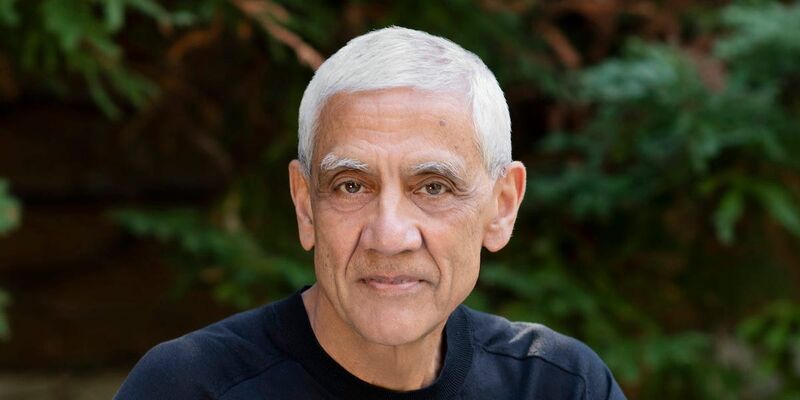
Khosla Ventures fundraising talks could produce as much as $5.5 billion across new investment vehicles, according to Bloomberg, in what would be the firm’s largest raise in its 20-year history. More than half of the target, $3 billion, is slated for seed and early-stage companies, a signal that Vinod Khosla’s firm still wants its AI exposure before categories and winners are fully priced.
Bloomberg reported that the figures may change while discussions continue. The planned structure includes $1 billion for seed investments, $2 billion for early-stage startups and a separate $2.5 billion opportunity fund for later-stage companies.
The firm has not announced a final close. Bloomberg attributed the fundraising details to people familiar with the matter, so the numbers should be read as targets rather than committed capital.
How much is Khosla Ventures raising?
Khosla Ventures is reportedly seeking up to $5.5 billion in total: $1 billion for seed deals, $2 billion for early-stage deals and $2.5 billion for an opportunity fund focused on more mature companies. If completed at that level, the raise would be the largest in the firm’s history.
The size would also mark a step up from its recent fundraising. Tech Funding News reported that Khosla Ventures was targeting $3.5 billion across three funds in early 2025 and later closed about $4 billion for its most recent vintage. A $5.5 billion raise would be roughly 40% larger than that close and would arrive about 17 months later.
Khosla Ventures’ AI credentials are unusually direct: the firm was OpenAI’s first outside investor. It has also backed AI companies including Cognition, Sakana AI and Physical Intelligence, according to the report.
Where the new capital fits
The early-stage emphasis matches the firm’s recent deal activity. In July 2026, Khosla Ventures led a $120 million round for legal AI company Norm Ai at a $1.2 billion valuation. In June, it backed General Intuition’s $320 million Series A, after leading the company’s seed round three months earlier. General Intuition is training AI systems on gameplay data for use in physical-world tasks.
The firm also joined Sequoia and others in Mach Industries’ Series C and led Factory’s $150 million Series C in April for AI coding agents. Samir Kaul, a managing director at Khosla Ventures, told Tech Funding News in prior coverage of Norm Ai that AI adoption in regulated industries depends on trust from the institutions overseeing those sectors.
That thesis connects several of the firm’s recent bets across legal AI, defense and robotics. The company-level claims remain broad, but the capital allocation is concrete: Khosla Ventures is reserving the largest portion of the proposed funds for the part of the market where technical risk and company formation risk remain highest.
How does this compare with other AI venture funds?
Khosla Ventures is raising into a market where large venture firms are building bigger pools for AI and deep tech. Founders Fund has closed a $6 billion vehicle aimed at concentrated late-stage AI and deep-tech investments. Sequoia Capital raised about $7 billion for an expansion fund focused on companies including OpenAI and Anthropic.
Menlo Ventures closed a $3 billion fund after an early Anthropic position reportedly grew from a $750 million stake to $14 billion. Kleiner Perkins closed $3.5 billion across two AI-focused funds in March 2026, close to twice the $2 billion it raised less than two years earlier. Andreessen Horowitz raised more than $15 billion across six funds in early 2026.
Against that backdrop, Khosla’s reported target is large but not outside the current range for top-tier firms competing for AI exposure. The more specific choice is stage: the firm is allocating most of the proposed capital to seed and early-stage startups, rather than concentrating the new money only in late-stage AI companies that already have consensus valuations.
This story draws on original reporting from TechFundingNews.