Kanishka Narayan gets Cabinet seat for UK AI policy
Prime Minister Andy Burnham has made Kanishka Narayan the UK’s cabinet-level AI minister as part of a machinery-of-government reshuffle.
By Ingrid Halvorsen · Venture Capital Reporter
· 3 min read
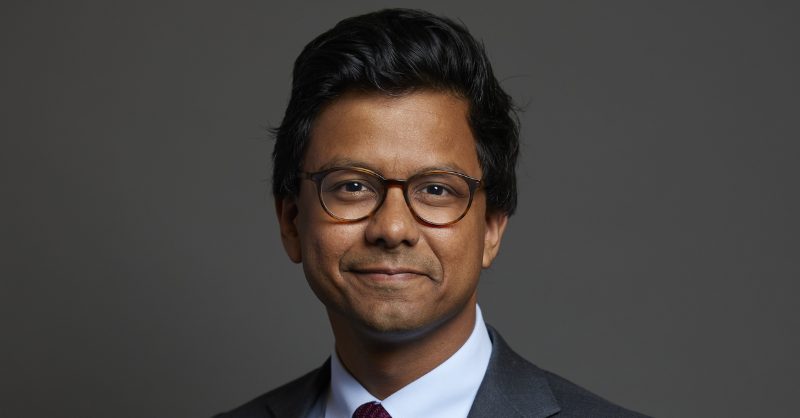
Prime Minister Andy Burnham has asked Kanishka Narayan to attend Cabinet as the UK’s minister for AI, giving the brief senior political visibility for the first time. The move folds AI policy into a wider reshuffle that dissolves the Department for Science, Innovation and Technology and merges science and innovation work with business and trade.
Narayan will work across the Cabinet Office and the newly created Department for Business, Innovation, Science and Trade, which is led by Jonathan Reynolds. The government has not set out a separate budget or detailed policy programme alongside the appointment, so the practical power of the role will depend on what authority it carries inside Whitehall and the merged department.
The appointment puts the UK closer to France and Canada, both of which have created senior ministerial roles focused on AI in the past two years. For founders and investors, the change is less about a job title than about whether AI policy now gets faster decisions on compute, procurement, safety rules and industrial strategy.
Narayan’s path into the role
Narayan was born in Bihar, India, in November 1989 and moved with his family to Cardiff at age 12. On his personal website, he says the family lived in a one-bedroom flat on Bedford Street and that he and his brother walked each day to Cathays High School, while his parents still live and work near the area where he grew up.
After a year at Cathays High School, Narayan applied for a scholarship to Eton College after encouragement from a teacher. He later studied philosophy, politics and economics at Balliol College, Oxford, and completed an MBA at Stanford University.
He entered Parliament in July 2024 as Labour MP for the Vale of Glamorgan, becoming Wales’ first MP from an ethnic minority background. In September 2025, under then-prime minister Keir Starmer, he was made Parliamentary Under-Secretary of State for AI and Online Safety inside DSIT.
In that junior ministerial role, Narayan worked on AI-related programmes including a £60 million investment in efficient AI research at Oxford and UCL. DSIT also sat behind other recent UK technology initiatives, including a £500 million Sovereign AI Fund and a national AI hardware strategy tied to a stated aim of capturing $50 billion of the global chip market.
A bigger brief after Starmer’s exit
Starmer announced on June 22 that he would step down as party leader and prime minister, staying on as caretaker while a successor was selected. He resigned formally to King Charles III on July 20, after which Burnham was invited to form a government.
Burnham’s restructuring breaks up DSIT. The Culture Department takes over digital transformation and online harms, while science and innovation move into the merged business, innovation, science and trade department. That shift matters for AI companies because regulation, industrial policy and commercial adoption are now being grouped more explicitly with business priorities.
Narayan said on X that being asked to attend Cabinet showed Burnham’s “deep commitment to AI’s importance.” He also described AI as likely to be “the most significant technology in human history.” Those are political claims, and the market will be looking for specifics: funding, procurement commitments, compute access, model regulation and how the UK intends to compete with larger US and EU programmes.
The appointment arrives after a period of prominent AI investment announcements in the UK, including AMD’s £2 billion commitment in Cambridge and Nebius’s £1.7 billion AI expansion announced at London Tech Week. It also lands during a sharper European debate over reliance on US AI models and software, with officials in France and Germany arguing for more technology sovereignty as Washington shows willingness to restrict foreign access to frontier AI.
Burnham has said little publicly about his technology strategy so far. Narayan’s Cabinet access gives the AI sector a clearer political counterpart, but the test will be whether the new government turns that access into decisions companies can underwrite.
This story draws on original reporting from TechFundingNews.