Glow exits stealth with $180 million for AI endpoint security
The Tel Aviv and Palo Alto startup is valued at $1.2 billion, with backers including Sequoia, Cyberstarts, Greenoaks and Redpoint.
By Marcus Adeyemi · Startups Editor
· 3 min read
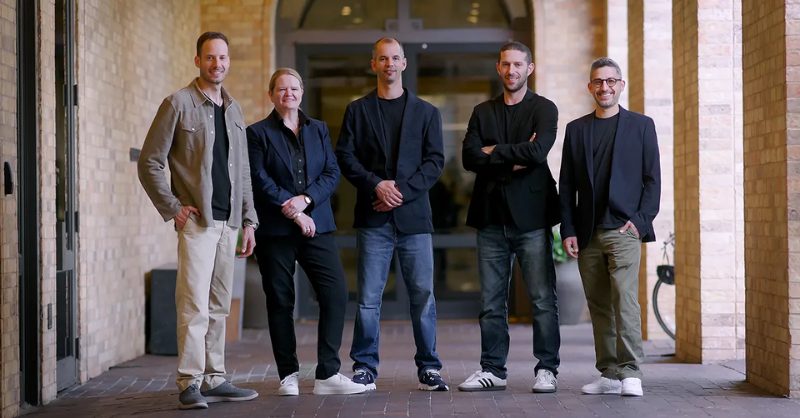
Glow has launched from stealth with $180 million in Series A funding at a $1.2 billion valuation, betting that enterprises will let AI agents block risky software on employee devices before security teams review it. The endpoint security startup, founded in 2025 and based in Tel Aviv and Palo Alto, did not disclose revenue, customer count or named customers.
The round was led by Sequoia Capital, Cyberstarts, Greenoaks and Redpoint Ventures. Index Ventures, Swish Ventures, Lux Capital, Operator Collective and Holly Ventures also participated. Glow said it has enterprise customers in healthcare, retail and financial services, but gave no specifics beyond those sectors.
Glow was founded by Roi Tiger, Omer Singer and Ophir Arie. Tiger spent nine years at Meta and became vice president of engineering after Meta acquired Onavo, the Tel Aviv mobile data startup he co-founded, for a reported $120 million to $200 million in 2013. Singer previously led cybersecurity strategy at Snowflake, while Arie ran research and development at industrial cybersecurity company Claroty.
Onavo history follows the launch
Tiger’s earlier company is a material part of the story because Onavo later became tied to one of Meta’s most scrutinized competitive intelligence efforts. According to court documents unsealed in 2024, Meta chief executive Mark Zuckerberg directed staff in 2016 to find ways to gather analytics on Snapchat after encrypted traffic limited Meta’s existing tracking methods.
Meta engineers used Onavo’s VPN software to intercept and decrypt traffic from rival apps in a program known internally as Project Ghostbusters, according to those filings. The effort also targeted YouTube and Amazon. Apple removed Onavo from the App Store in 2018, Meta shut it down in 2019, and the court filings later characterized the conduct as criminal as well as anticompetitive.
Onavo has also been examined by EU antitrust regulators in connection with Meta’s acquisition of WhatsApp. Tiger has not publicly addressed his role in Project Ghostbusters, and Glow’s announcement did not refer to it.
Glow’s prevention pitch
Glow says its product focuses on stopping unapproved software before it installs, rather than detecting threats after execution. The company says unauthorized AI use on corporate devices rose from 15% to 45% over the past year, a figure it did not tie to an outside study.
The platform uses AI agents to map device activity, assess risk in real time and prevent software that fails policy checks from running. Tiger says Glow has already blocked malicious npm packages from customer environments and identified devices where endpoint detection products were absent or impaired. Those claims were not accompanied by customer names or incident volumes.
Glow’s system runs on Anthropic and Google Gemini models through Amazon Bedrock, combined with the company’s own context engine. Its executive team also includes chief product officer Arnon Joseph, a former senior product director at Meta, and chief operating officer Emily Heath, who previously served as CISO at United Airlines and DocuSign and sat on Wiz’s board through its $32 billion sale to Google.
A crowded AI security funding cycle
Glow is entering a market led by CrowdStrike, Microsoft and SentinelOne, where the dominant products have emphasized detection and response. The company is positioning against that model with a prevention-first approach, but it remains unproven whether enterprises will give AI agents authority to make automatic blocking decisions at scale.
The financing fits a broader pattern of AI-security companies raising large rounds ahead of disclosed revenue. Tenex reached a valuation above $1 billion in April 2026 with a $250 million round for AI-managed detection and response. XBOW raised $120 million and became a unicorn with software-vulnerability automation, while NeuralTrust raised $20 million in seed funding for enterprise AI agent security.
Glow had previously raised about $80 million at a valuation near $400 million. The company now employs close to 100 people, with about 70% in Israel, and plans to use the new capital to expand its U.S. go-to-market organization and Glow Labs, its research arm.
This story draws on original reporting from TechFundingNews.