deltaVision raises €10.2 million for space fluidics manufacturing
KT Ventures and Valemount Capital led the Munich company’s first external round as it prepares an orbital refuelling payload for 2027.
By Marcus Adeyemi · Startups Editor
· 3 min read
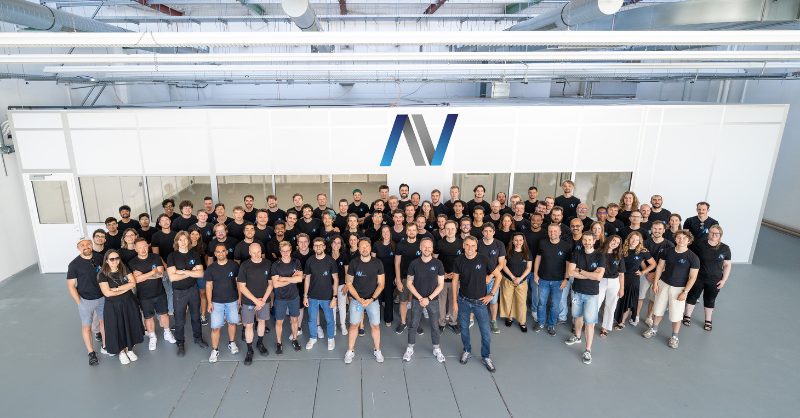
deltaVision has raised €10.2 million in its first outside funding round to expand production of fluidic systems used in spacecraft and launch vehicles. The Munich-based company is positioning manufacturing capacity, rather than a claimed technical breakthrough, as its main answer to demand for valves, pumps and pressure regulators in space hardware.
KT Ventures and Valemount Capital led the round, increasing their exposure after an earlier convertible loan. Futury Capital and private investors, including family-office capital, also participated. The company did not disclose its valuation, revenue, ownership split or detailed round structure.
Founded in 2022 by Alex Plebuch, Denis Kiefel and Matthias Guenther, deltaVision builds components that control the movement of propellant and pressure between tanks and engines in launchers, satellites and landers. The company says it has been profitable since inception, has 134 employees and serves more than 60 customers across four continents, including startups, large aerospace primes and space agencies.
Production capacity is the pitch
Plebuch, who previously worked at large European aerospace companies, has said repeated problems with propulsion subsystems helped lead to the creation of deltaVision. His argument is that Europe has limited specialist competition because larger aerospace groups often build these parts internally, while US suppliers face capacity constraints.
That makes deltaVision’s fundraise less about inventing a new category than about trying to industrialize a component niche that can bottleneck missions. The company plans to use the money to lift annual component output to 5,000 units, establish a French subsidiary called deltaVision SASU in Nouvelle-Aquitaine, and expand research into integrated propellant-transfer systems for in-orbit refuelling.
The French operation is intended to support R&D and products that add sensing and intelligence to fluidic systems, according to the company. deltaVision also works with resale partners in the US, plans to license products for local manufacturing and expects to create a US branch within months. It wants to increase valve production in the US as well, although it has not provided a timetable beyond that.
Orbital refuelling remains an open market
The company says its components have had space heritage since 2025. Plebuch has also said deltaVision has supplied roughly 50 components per mission to the European Space Agency’s Argonaut lunar lander program.
The next stated milestone is more ambitious: deltaVision plans to launch its first integrated refuelling payload into orbit in March 2027. That payload will test whether the company can move from component supply into integrated propellant-transfer systems, a field where standards and commercial demand are still being defined.
The competitive set is better funded and more mature in parts of the market. Marotta Controls, founded in 1943, has delivered more than 50,000 flow-control valves to customers including SpaceX and Rocket Lab. Colorado-based Orbit Fab has raised about $65.9 million around its RAFTI refuelling ports. In Europe, The Exploration Company has publicly credited deltaVision with support on valve design for reusable capsule engines.
Johannes Pichler of KT Ventures said the investment is based on deltaVision’s profitable model and international growth opportunities. The company’s next test is whether profitability and faster production can hold up as it expands geographically and moves closer to orbital refuelling hardware, where US competitors and emerging standards could shape the market before deltaVision’s 2027 payload flies.
This story draws on original reporting from TechFundingNews.