CuspAI raises $450 million at $2.6 billion valuation
The Cambridge AI materials startup has lifted its valuation nearly fivefold in nine months, with Kleiner Perkins, NEA and Bezos Expeditions backing the round.
By Ingrid Halvorsen · Venture Capital Reporter
· 3 min read
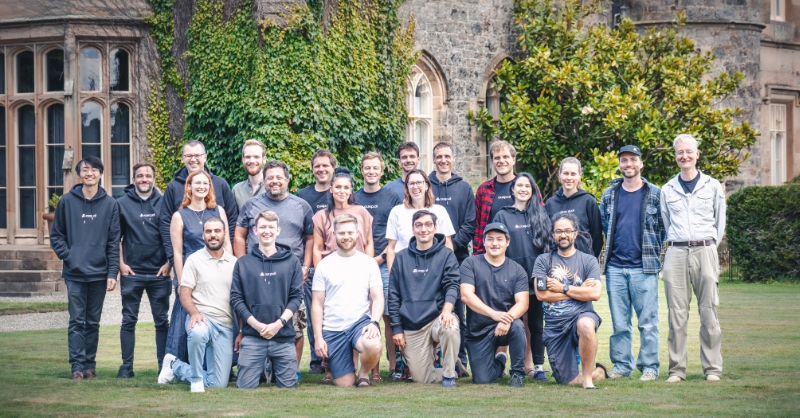
CuspAI has raised a $450 million Series B at a $2.6 billion valuation to expand its AI materials discovery platform, with Kleiner Perkins and NEA leading the round and Bezos Expeditions taking part. The Cambridge, UK-based company has now raised more than $650 million, but it did not disclose revenue, burn rate or the size of any investor’s stake.
The round adds another high-priced company to the AI-for-science category, where investors are funding software and lab infrastructure intended to shorten materials research cycles. CuspAI’s valuation was $520 million at its Series A nine months earlier, according to the company information, giving it an almost fivefold step-up before the business has disclosed financial traction.
New backers in the Series B include Glade Brook Capital Partners, Lux Capital, AMD Ventures, Tru Arrow Partners, StepStone, Britain’s Sovereign AI Venture Fund, the Netherlands’ Invest-NL and John Doerr. Existing investors Temasek, Basis Set Ventures, Giant Ventures, Touring Capital, Prosus, Phoenix Court and Northzone also participated.
CuspAI was founded in 2024 by Dr. Chad Edwards, a chemist who helped build Quantinuum, and Professor Max Welling, a University of Amsterdam machine learning researcher and former Microsoft Research distinguished scientist. The company has about 65 to 68 employees and plans to open an office in London’s King’s Cross in 2026.
What CuspAI says its platform does
CuspAI describes its product as a search engine for materials. Customers specify properties they want, such as conductivity, strength or heat tolerance, and the platform returns candidate chemical compositions for testing. The company says the approach can be up to 10 times faster than conventional trial-and-error research, a claim that depends on lab validation and was not accompanied by disclosed benchmark data.
The company said ASML, Meta, Samsung and Hyundai already use its materials search engine. It has also worked with Hyundai on sustainable energy projects and with Kemira on removing PFAS compounds from water. CuspAI did not disclose contract values, renewal terms or how many of those customer relationships are paid production deployments.
Alongside the financing, CuspAI launched the AI Materials Foundry, a partner network with more than 45 participants, including NVIDIA and Meta. The company said the new capital will go toward computational infrastructure, materials research hiring and commercialization of its molecular design platform.
A crowded and expensive category
CuspAI is competing with other well-funded materials and science AI companies, including Orbital Materials, XtalPi, Dassault Systèmes and Schrödinger. Other venture-backed rivals include Flagship Pioneering’s Lila Sciences, which has raised more than $550 million, and Periodic Labs, founded by former OpenAI and Google DeepMind staff and valued at $1 billion. European competitors include Altrove in Paris, Dunia Innovations in Germany and Molecular Quantum Solutions in Denmark.
A market forecast distributed by GlobeNewswire estimated the AI-driven materials discovery market at about $0.74 billion in 2025 and projected it could reach $2.77 billion by 2030, implying 30% annual growth. Those forecasts help explain the investor demand, but they also show that CuspAI’s latest private valuation is close to the projected size of the entire market in 2030.
Bezos Expeditions has previously backed AI companies including Anthropic, Perplexity AI, Physical Intelligence and Figure AI, usually through minority positions. Its participation in CuspAI follows the announcement of Prometheus, Jeff Bezos’s physical AI lab, though no formal commercial connection between the two was disclosed.
This story draws on original reporting from TechFundingNews.