Colossal seeks up to $30 billion valuation before de-extinction milestone
Axios reported Colossal Biosciences is in funding talks at a $20 billion to $30 billion valuation, with the round size undisclosed.
By Ingrid Halvorsen · Venture Capital Reporter
· 3 min read
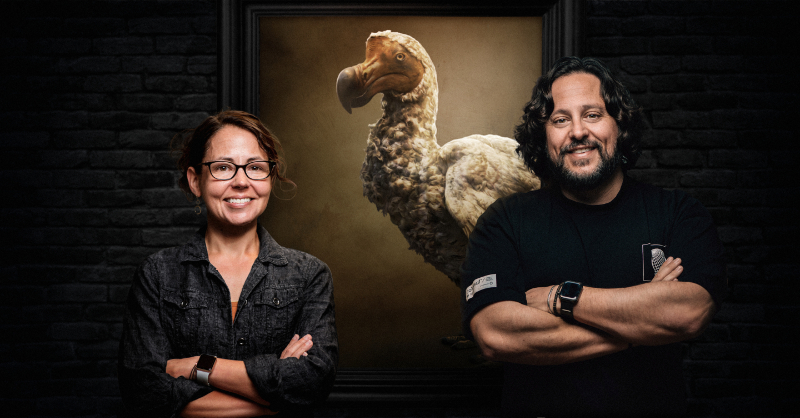
Colossal Biosciences is in talks to raise new capital at a valuation between $20 billion and $30 billion, Axios reported, while the company has yet to revive an extinct species. The proposed price would be a sharp step up from the $10.2 billion valuation attached to its $200 million Series C in January 2025, according to Tech Funding News, and suggests investors are underwriting more than the mammoth pitch.
The amount Colossal is seeking to raise has not been disclosed. Axios reported the valuation range, but the company has not said how any new money would be split among its de-extinction work, software and biology tools, spinouts or acquisitions.
What investors are being asked to price
Colossal was founded in 2021 by entrepreneur Ben Lamm and Harvard geneticist George Church, along with other co-founders. Its public brand has been built around attempts to bring back the woolly mammoth, the dodo and the Tasmanian tiger. None has returned.
The broader asset base is the company’s work in gene editing, reproductive technology, computational biology and AI-driven genomics. Those capabilities can be applied outside de-extinction, which is likely central to the valuation case. Colossal’s chief science officer, Beth Shapiro, previously told Tech Funding News that the company’s dodo work had adapted tools from chickens for use in pigeons, describing the need for species-specific approaches to avian genetic engineering.
Colossal has also begun to show revenue-linked partnerships, though the scale of commercial revenue has not been disclosed. USA Today reported that the United Arab Emirates put $60 million into the company in February 2026 as part of a partnership to create a global BioVault for endangered-species genetic material. That deal brought total capital raised to $615 million, according to the report.
Spinouts strengthen the platform argument
The clearest commercial evidence so far sits in businesses built from Colossal’s technology rather than in a revived animal. Axios named two spinouts: Breaking, which focuses on plastic degradation, and Form Bio, a computational biology software company.
TechCrunch reported a broader count, adding Astromech, described as an AI-driven predictive biology company valued at $2 billion in March. The difference in counts matters less than the pattern: Colossal is packaging parts of its research base into separate companies that can seek their own capital and customers.
That is a more familiar venture story than de-extinction. Investors can value software, AI biology tools and industrial biotech applications with more conventional assumptions than they can a future population of mammoths. Colossal has not disclosed revenue, margins or customer concentration for these businesses.
Future markets remain speculative
Some of the upside implied by a $20 billion to $30 billion valuation still depends on markets that are early or unproven. Lamm has told reporters he expects Colossal to develop a working artificial womb for mammals within a year, with possible applications in human fertility treatment. The company has also discussed biodiversity credits as a potential revenue stream, modeled on carbon credits, where ecosystem restoration could carry economic value.
Those opportunities remain projections, and the public record does not show a mature market for either one. Colossal’s reported funding talks indicate investors may be willing to pay for a synthetic biology platform with several possible exits from the same research base: IP licensing, software, reproductive tools, conservation contracts, sovereign partnerships and new company formation.
The mammoth remains the company’s most marketable symbol. The valuation talks, if completed near the top of the reported range, would show that the financial bet is on the infrastructure built around de-extinction, not on a completed de-extinction outcome.
This story draws on original reporting from TechFundingNews.