Clipway closes $6.4 billion debut secondaries fund
The London firm, founded by three former Ardian executives, raised 60% above target for its first secondaries vehicle.
By Marcus Adeyemi · Startups Editor
· 3 min read
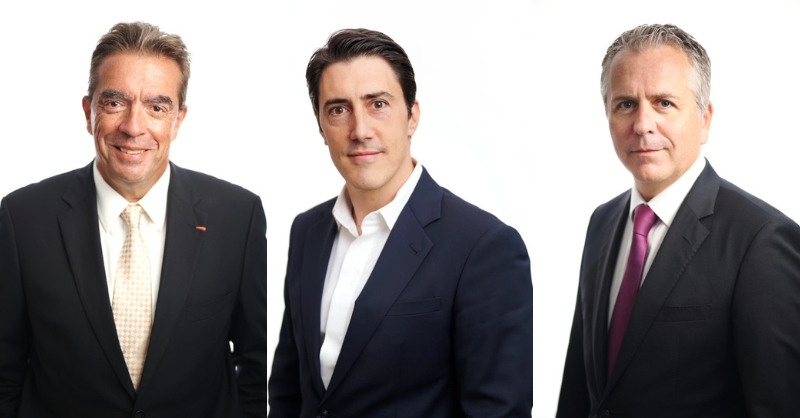
Clipway has closed Clipway Secondary Fund I at $6.4 billion, 60% above its initial $4 billion target, giving the London private equity secondaries firm one of the most closely watched first funds in the category. The company said the fund is the largest debut secondaries platform raised to date and positions Clipway as the largest independent dedicated secondaries firm.
The raise gives Clipway immediate scale in a market where limited partners are looking for liquidity while IPO and M&A exit routes remain slower. The firm said 186 limited partners committed to the fund across six continents, including sovereign wealth funds, pension plans, insurers, endowments and family offices.
By committed capital, 44% came from Europe, 21% from North America and Latin America, 18% from the Middle East and 17% from Asia. Clipway did not disclose fund economics or return targets.
Ardian alumni built the firm
Clipway was founded three years ago by Vincent Gombault, Ingmar Vallano and Benoît Verbrugghe, all former senior executives at Ardian, the Paris-based private equity firm with more than $170 billion in assets under management.
Gombault co-founded Ardian’s fund-of-funds business and served as global head of funds of funds and private debt before leaving in December 2020. Vallano was a senior managing director for fund-of-funds and co-investment until 2021. Verbrugghe previously led Ardian USA and served on Ardian’s executive committee.
That background matters because secondaries fundraising is heavily relationship-driven. Clipway entered the market without a prior fund history under its own name, but with founders who had already run large private equity capital pools and dealt with institutional LPs at scale.
The AI pitch is central to the strategy
Clipway says its investment process is built around TESS, its Tech-Enabled Secondaries System. Since launch, the firm says TESS has reviewed more than $267 billion of secondaries opportunities covering 38,500 private companies and 3,400 private equity funds.
Clipway said it has invested just over $6 billion across 1,403 companies and 177 funds, meaning the platform rejected roughly 97% of reviewed opportunities. The company describes TESS as a screening, analytics, pricing and portfolio-construction system, with final investment decisions still made by the investment team.
The firm said two-thirds of capital deployed to date came from proprietary, off-market transactions. Strategic partners including Mubadala Investment Company, Carmignac and General Atlantic have access to TESS to review and monitor their own private equity portfolios, according to Clipway.
The AI positioning is more specific than many private markets technology claims because Clipway disclosed the volume of opportunities processed and the number of companies and funds reviewed. It still has not shown how the system performs across cycles as a standalone firm.
A concentrated market for scale managers
Clipway has grown to 62 professionals across six offices. Eighteen employees work in data science and technology, a substantial technology headcount for a private equity secondaries firm.
The firm also said no individual owns more than 10% of the company, with equity spread across the senior team. For institutional LPs, that ownership structure is meant to reduce founder-departure risk, a recurring governance issue in asset management.
Clipway Secondary Fund I focuses on LP-led secondary deals in North American and Western European buyout funds, with exposure to mid-market companies in developed markets. According to PitchBook’s Q1 2026 Global Private Market Fundraising Report, secondaries fundraising has become more concentrated among firms with scale, access and established LP relationships. Clipway’s first close at this size suggests LPs were willing to treat its founders’ Ardian track record as portable.
This story draws on original reporting from TechFundingNews.