Black Ops VC founders argue Black founders need larger AI-era seed rounds
James Norman and Sean Green point to weak 2025 funding data and say underfunded seed rounds are blocking more Black-led startups from reaching Series A.
By Marcus Adeyemi · Startups Editor
· 3 min read
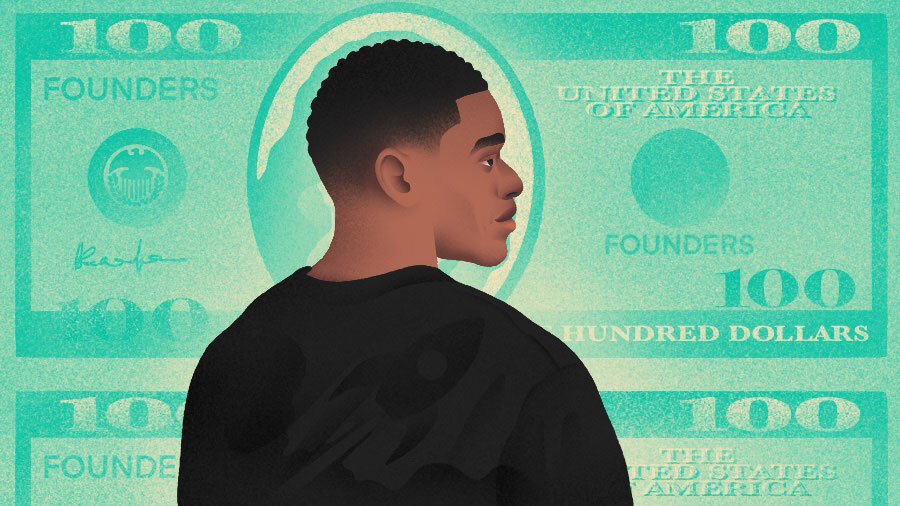
Black Operator Ventures co-founders James Norman and Sean Green are pushing a narrower diagnosis for the venture funding gap facing Black founders: seed rounds are often too small to get companies to Series A. Their argument comes against Crunchbase data showing U.S. startups with at least one Black founder raised $942 million in 2025, equal to 0.32% of U.S. venture investment.
No new fund, investment vehicle or company financing was disclosed. The point from Norman and Green is that AI has changed early company formation by reducing the cost of building software, while leaving the expensive parts of scaling, sales, senior hiring and customer acquisition, largely intact.
AI lowers build costs, not Series A expectations
Norman and Green, who co-founded early-stage firm Black Ops VC, argue that AI tools let smaller teams produce software faster and automate more internal work. They say a startup that once needed a much larger engineering and operating team can now get a product into market with far fewer people.
Their caution is that this efficiency can be misread by investors and founders as proof that startups need less capital overall. Series A investors still expect evidence of a business, including revenue, retention, efficient growth and a repeatable go-to-market motion, according to Norman and Green. Those benchmarks require time and funding even if the first version of the product is cheaper to build.
That distinction matters in the current venture market, where investors have been less willing to underwrite ideas without traction. In Norman and Green’s framing, seed capital is no longer mainly financing a prototype. It is financing the proof points required for the next institutional round.
Funding remains concentrated
The numbers cited by Crunchbase show how narrow the funding base remains. Black-founded U.S. startups raised $5.2 billion in 2021 during the post-George Floyd investment surge, according to Crunchbase. By 2025, that total had fallen to $942 million, one of the lowest shares in years.
Crunchbase data also showed a stronger start to 2026, with Black-founded startups raising about $643 million by late May. Norman and Green noted that the improvement was heavily influenced by a small number of large deals, including a $350 million AI round, rather than broad-based access to capital across the market.
The concern is not only that Black founders receive a small share of venture dollars. Norman and Green argue that many are closing partial seed rounds that extend runway but do not provide enough operating flexibility to hit Series A metrics. That can leave founders returning to the market repeatedly instead of spending that time on customers, hiring and product work.
Oversubscription as operating cushion
Norman and Green say oversubscribed seed rounds should be treated as more than a signaling event for Black founders. Extra capital can give companies more time to sell, recruit, withstand slower fundraising cycles and pursue growth without restarting a fundraising process every few months.
The argument is consistent with a broader shift in early-stage venture: capital efficiency is being rewarded, but investors are also asking for stronger proof before leading Series A rounds. For underrepresented founders, the gap between those two requirements can be severe if the seed round is sized only for survival.
Norman is a managing partner at Black Ops VC, CEO of Pilotly and a partner at Transparent Collective. Green is a general partner at Black Ops VC and founder and CEO of Arternal. Their view is that improving access to first checks is no longer enough if Black-led startups are not funded through the milestones that unlock larger institutional rounds.
This story draws on original reporting from Crunchbase News.