Nvidia partners’ China ties draw scrutiny in CBS News investigation
A C4ADS review for CBS News traces Chinese ownership links at RiCloud AI and Aivres, without alleging wrongdoing by either company.
By Dominic Okoye · Staff Writer
· 3 min read
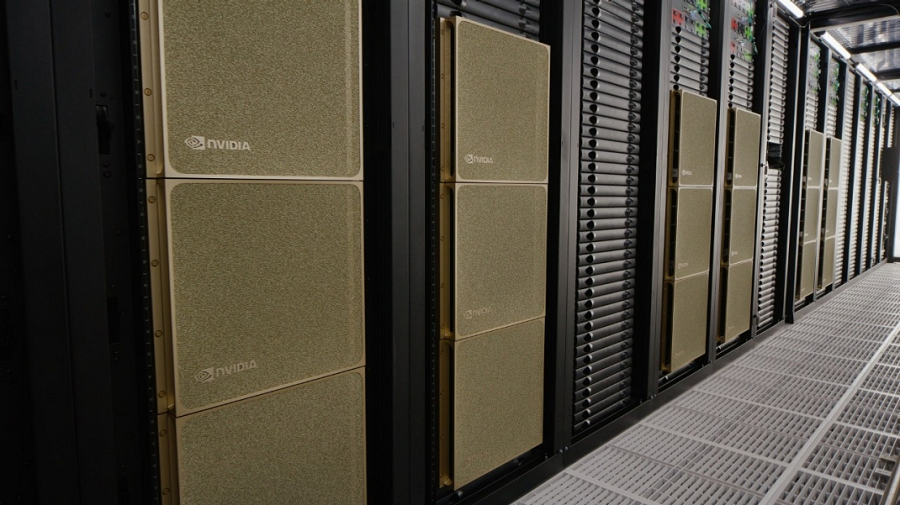
A CBS News investigation into Nvidia partners China ties found that some U.S.-based companies in the chipmaker’s partner network have Chinese parents or affiliations, complicating efforts to trace the ultimate use of advanced AI systems. The review, conducted by Washington nonprofit C4ADS, examined corporate filings, ownership records, court records and Nvidia relationships dating to 2023; it does not establish that the named companies violated export controls.
One focus was San Jose-based RiCloud AI, which Nvidia lists as a preferred partner. CBS News reported that RiCloud’s parent, Yuxing InfoTech Investment Holdings, is headquartered in Shenzhen and listed in Hong Kong. Nvidia’s public filings treat sales to RiCloud AI Inc. as U.S. sales, according to the reporting.
Preferred-partner status reportedly gives RiCloud priority access to high-end Nvidia chips, as well as the company’s software and technical support. CBS News reported that RiCloud reached Nvidia partner status by December 2025, roughly 10 weeks after incorporation, and later became a preferred cloud partner. Nvidia did not respond to CBS questions about the background checks it conducted before granting that status.
The U.S. government has not accused RiCloud or Yuxing of wrongdoing, CBS News reported. C4ADS’ findings instead add detail on the ownership chain behind a company purchasing advanced computing equipment within the United States.
What did the Nvidia partners China ties investigation find?
CBS News reported that RiCloud agreed to lease 300 Nvidia B300 servers for $120 million to Taiwan-based Agencia Comercial Spirits. The company had primarily been a whisky importer before moving into AI data-center deals. That agreement is a reported commercial transaction, not evidence that the servers were diverted to China.
The investigation also examined Aivres, a California company that Nvidia lists as an elite compute partner. Aivres previously used the Inspur name, while Chinese Inspur group companies were added to the U.S. Commerce Department’s Entity List in March 2023. Aivres itself is not on that list, according to CBS News reporting.
A New York Times analysis of trade records, cited by CBS News, found that about $3 billion of Aivres exports to Southeast Asia between April 2024 and February 2026 involved computers containing Nvidia Blackwell chips. The reporting does not say those exports reached China.
The distinction is central. U.S. incorporation, Chinese parent ownership, the country where servers are delivered and the identity of the user renting computing capacity are separate questions. CBS News reported that layered ownership, sales and leasing arrangements can make a chip system’s final destination and end use difficult to determine. As a general implication of those chain-of-custody concerns, a sale recorded to a U.S. company followed by deployment or resale elsewhere may make ultimate use harder to verify. The reporting does not show that Nvidia knew of or enabled illegal transfers in the RiCloud or Aivres cases.
How did U.S. rules for overseas AI compute change?
The investigation arrives after the Commerce Department tightened controls designed to address remote access to advanced AI compute. Reuters reported that a November 16 rule added license requirements for covered advanced-chip shipments to Singapore, Thailand, Malaysia, Indonesia and Brazil. It also requires overseas data centers providing significant computing power to China-headquartered firms to obtain licenses within 90 days to continue those services or face future export restrictions.
The policy change targets routes through which China-based companies can access advanced compute outside China. It does not turn Chinese ownership, shipments to Southeast Asia or an Nvidia partner designation into proof of an export-control breach.
This story draws on original reporting from SiliconANGLE.