Nvidia brings Cosmos 3 Edge model to Japan’s robotics sector
Nvidia introduced a 4 billion-parameter edge model and tied it to a broader Japan push spanning robotics partners and a state-backed AI factory.
By Wei-Lin Zhao · AI Correspondent
· 3 min read
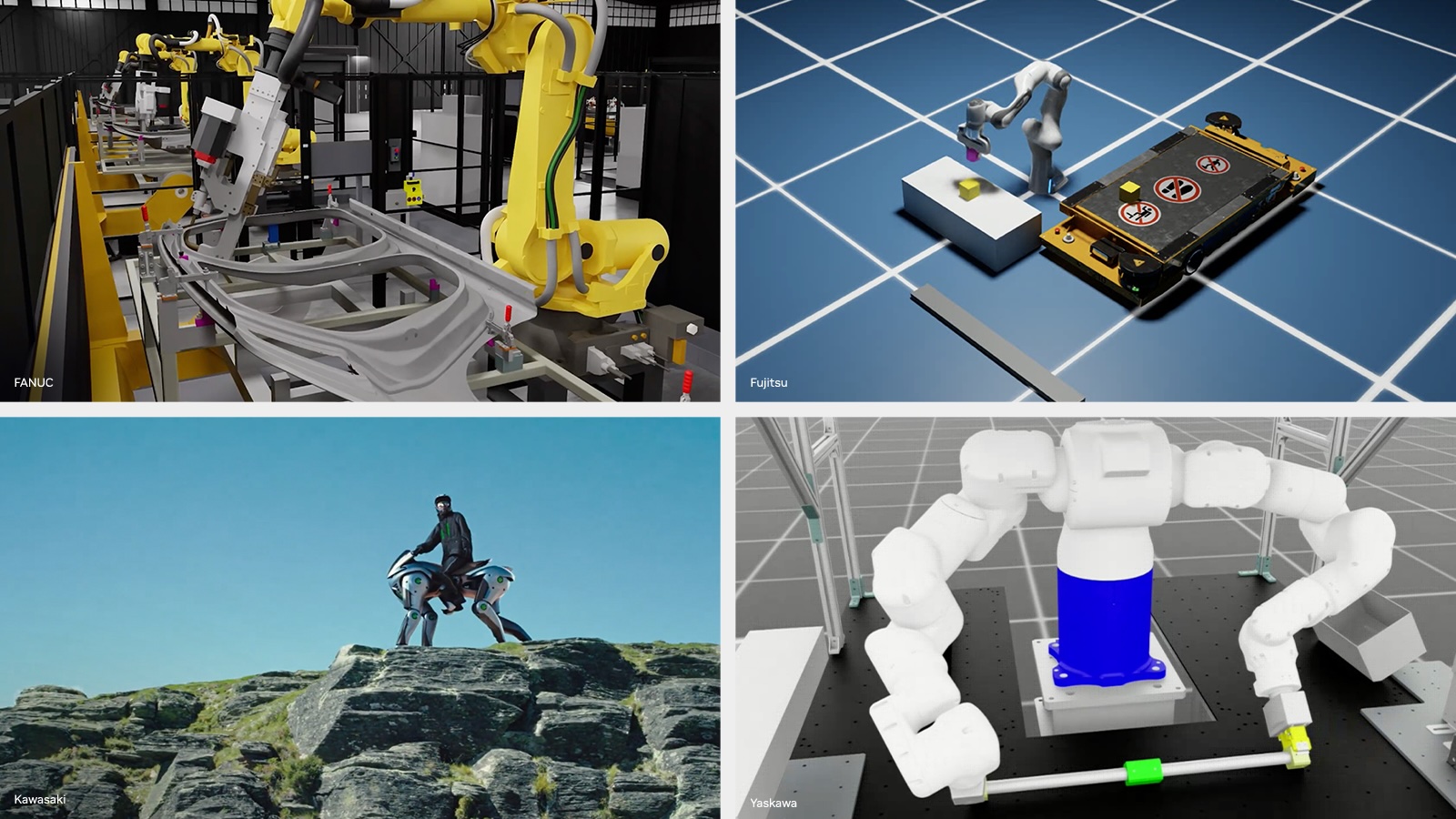
Nvidia has introduced Cosmos 3 Edge, a 4 billion-parameter world model designed to run vision reasoning and robot-control workloads on edge hardware, while expanding its physical AI program with more than 20 Japanese companies. The announcement sits alongside a separate Japan-backed AI infrastructure project that CNBC reported will receive about $2.4 billion from the government, underscoring how Nvidia is pairing model releases with national compute buildouts.
Cosmos 3 Edge is built on Nvidia’s Nemotron family and is meant for robots, autonomous machines and systems that need to process visual input locally rather than rely entirely on centralized data centers. Nvidia said developers can adapt the model to particular robots, vehicles and sensors in roughly a day. The company did not disclose pricing, customer commitments or commercial deployment volumes for the model.
The model runs on Nvidia edge graphics chips and its Jetson platform, including the newly announced T2000 and T3000 modules. Nvidia also said Cosmos 3 Edge can run on RTX GPUs and DGX systems, keeping the model inside the company’s broader hardware stack from device to training infrastructure.
Cosmos is Nvidia’s world foundation model platform for physical AI, a term the company uses for systems that perceive and act in physical environments. Nvidia introduced the broader Cosmos 3 generation of omnimodal world models in June. The company says the platform can generate and evaluate training data for robots and autonomous machines, a core bottleneck for robotics teams trying to move from simulation into field use.
Nvidia also announced new Metropolis libraries for Cosmos-based video intelligence applications. The company claims the libraries can help developers build and operate those systems at least six times faster by using coding agents for training and deployment. Nvidia did not provide an independent benchmark in the announcement.
Japan partnerships anchor the rollout
The Japan portion of the announcement is broad. More than 20 companies said they plan to join the Nvidia Cosmos Coalition, including FANUC, Yaskawa Electric, Kawasaki Heavy Industries, Fujitsu, Hitachi, NEC, SoftBank, Sony, Honda R&D and Toyota-backed Preferred Networks.
Several companies are already attaching specific projects to Nvidia’s stack. Fujitsu is working with FANUC, Yaskawa Electric and Kawasaki Heavy Industries on a collaborative control platform. SoftBank is building a physical AI development platform using Cosmos, Omniverse and Isaac Sim. Groove X is using Jetson for its LOVOT companion robots. Enactic is fine-tuning Nvidia’s Isaac GR00T model for elder-care robots, while Telexistence is applying Nvidia tools to retail automation.
Jensen Huang, Nvidia’s founder and chief executive, said Japan has a “once-in-a-generation opportunity” in physical AI. He is in Japan this week for a series of announcements, according to Nvidia.
Sovereign AI meets factory automation
Nvidia and Japan’s government also announced what they described as the first national AI infrastructure project. Noetra will build an AI factory called FRONTia using 27,500 Nvidia Rubin GPUs and 13,750 Vera CPUs. The system is expected to draw 140 megawatts and is backed by Japan’s Ministry of Economy, Trade and Industry.
FRONTia is intended to support open multimodal foundation models for robotics, digital twins and intelligent manufacturing. CNBC reported that Japan is putting about $2.4 billion into the effort. Japan is targeting more than 30% of the global AI robotics market by 2040, a market Nvidia and its partners value at $133 billion.
The strategy fits Nvidia’s sovereign AI business, where governments fund domestic compute capacity rather than rely solely on foreign cloud providers. For Nvidia, Japan offers an industrial base with robotics incumbents, manufacturing customers and a government willing to fund infrastructure. What remains undisclosed is how much revenue the Cosmos model line will generate, how quickly partners will ship production systems and whether physical AI demand can grow beyond pilots at the pace implied by the infrastructure buildout.
This story draws on original reporting from SiliconANGLE.