Mimic Robotics launches dexterous hand for industrial automation
The Swiss robotics company says its M1.0 hand combines tendon-driven hardware, tactile sensors and AI training based on human motion data.
By Wei-Lin Zhao · AI Correspondent
· 3 min read
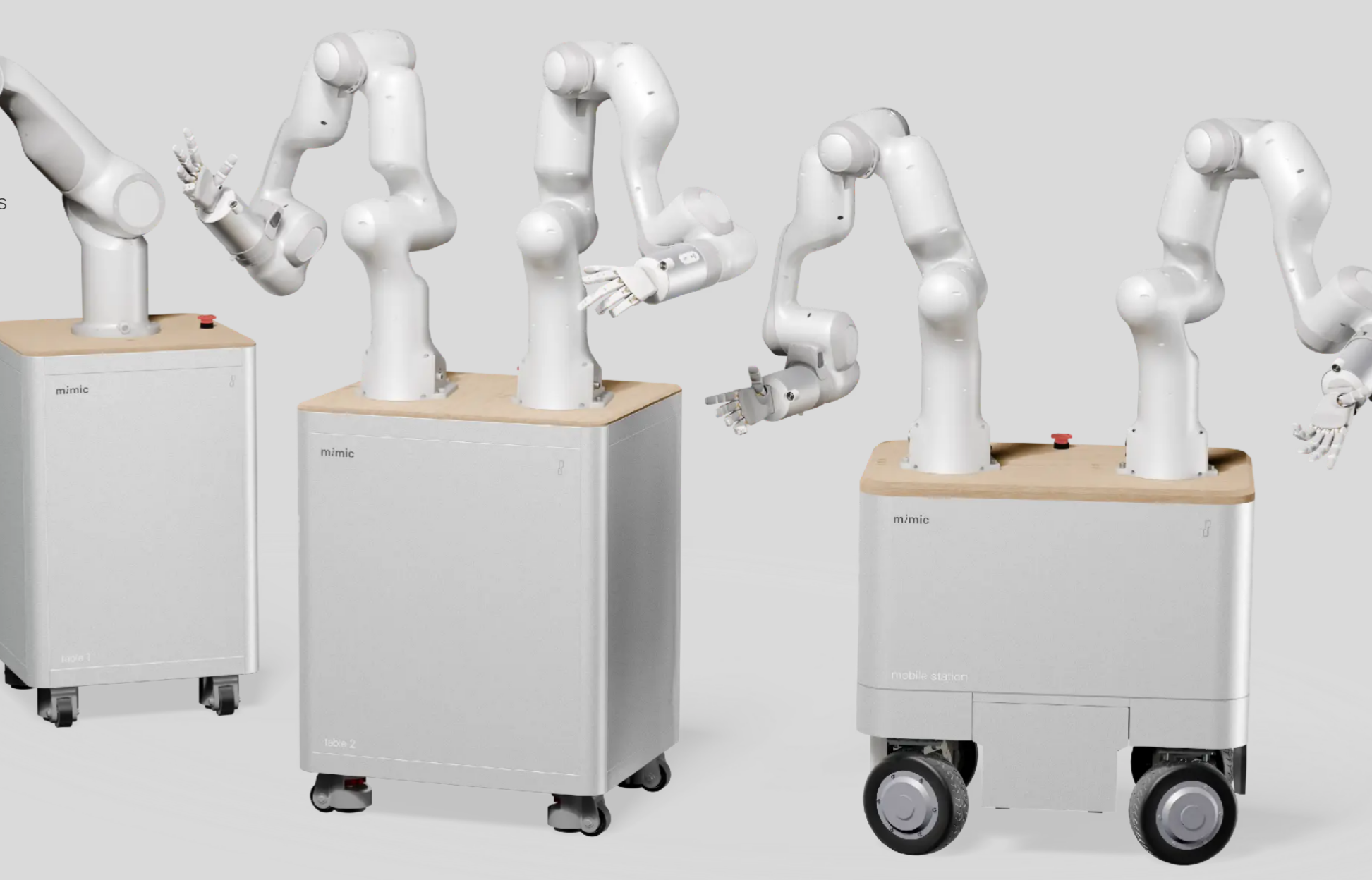
Mimic Robotics AG has launched the Mimic hand M1.0, a robotic hand for industrial automation that the company says can reproduce human-like grasping and fine manipulation. The Switzerland-based company did not disclose pricing, customers, production volume, revenue, headcount or deployment timelines, leaving the commercial scale of the launch unclear.
The product is aimed at the embodied AI market, where vendors are trying to connect perception models, sensors and robotic systems that can plan and carry out physical tasks. Mimic is selling both sides of that stack: the hand hardware and the AI models intended to control it.
The M1.0 is designed and manufactured in Switzerland by Mimic. According to the company, the hand weighs about 4 pounds and uses bidirectional pulley-guided tendons to move its fingers, an approach meant to approximate some of the mechanics of a human hand. Mimic says tactile sensors in the fingertips measure force from different angles, which is meant to reduce damage when handling delicate or soft objects. The company also said the hand can be fitted with different gloves for specific use cases.
Why Mimic is betting on a five-fingered design
Mimic’s argument is that current robotics systems face a data and hardware mismatch. Large language models benefited from large volumes of internet text, while robotics companies do not have an equivalent supply of physical interaction data. At the same time, much industrial automation still relies on two-finger grippers, which do not move or grasp like human hands.
That matters for training systems from human demonstrations. Video can show how people reach for, grip and manipulate objects, but a two-finger robotic gripper cannot directly imitate many of those movements. Mimic says its approach uses video of human activity during pretraining, then adds physical data from wearables during later training to adapt movements to the robot hand.
The company has not disclosed the size of its training data, the accuracy of its models, failure rates, cycle times or benchmark results against existing grippers. Those omissions matter because demonstrations of dexterity can be compelling while still falling short of factory requirements for uptime, repeatability and maintenance cost.
What the hand can do, according to the company
In company demonstrations, Mimic showed the M1.0 using tweezers to pick up a packaged integrated circuit, place it on a printed circuit board and adjust it into position. Another demonstration showed one hand passing a bolt to another. Mimic also showed independent finger movement and hand gestures, including a peace sign.
The company says the hand can lift and hold more than 25 kilograms, or about 55 pounds. Mimic positions the product for assembly, packaging, sorting and other manual industrial work that involves irregular objects or fine control. It also says the hand can be paired with cameras and touch sensors to work in less structured settings, including opening and closing boxes, placing items, handling wiring and manipulating objects with varied shapes.
Mimic also suggests the same dexterity could support gentler uses, including care settings or sign language display, but the announcement centers on industrial automation. The launch adds another specialized hardware layer to the physical AI push, where the key question for buyers remains whether dexterous hands can justify their added complexity over simpler grippers in real production environments.
This story draws on original reporting from SiliconANGLE.