AMD physical AI platform targets robotics and autonomous systems
AMD is pitching CPUs, GPUs and FPGAs as one robotics stack, but gave no pricing, customer wins or deployment timelines.
By Wei-Lin Zhao · AI Correspondent
· 3 min read
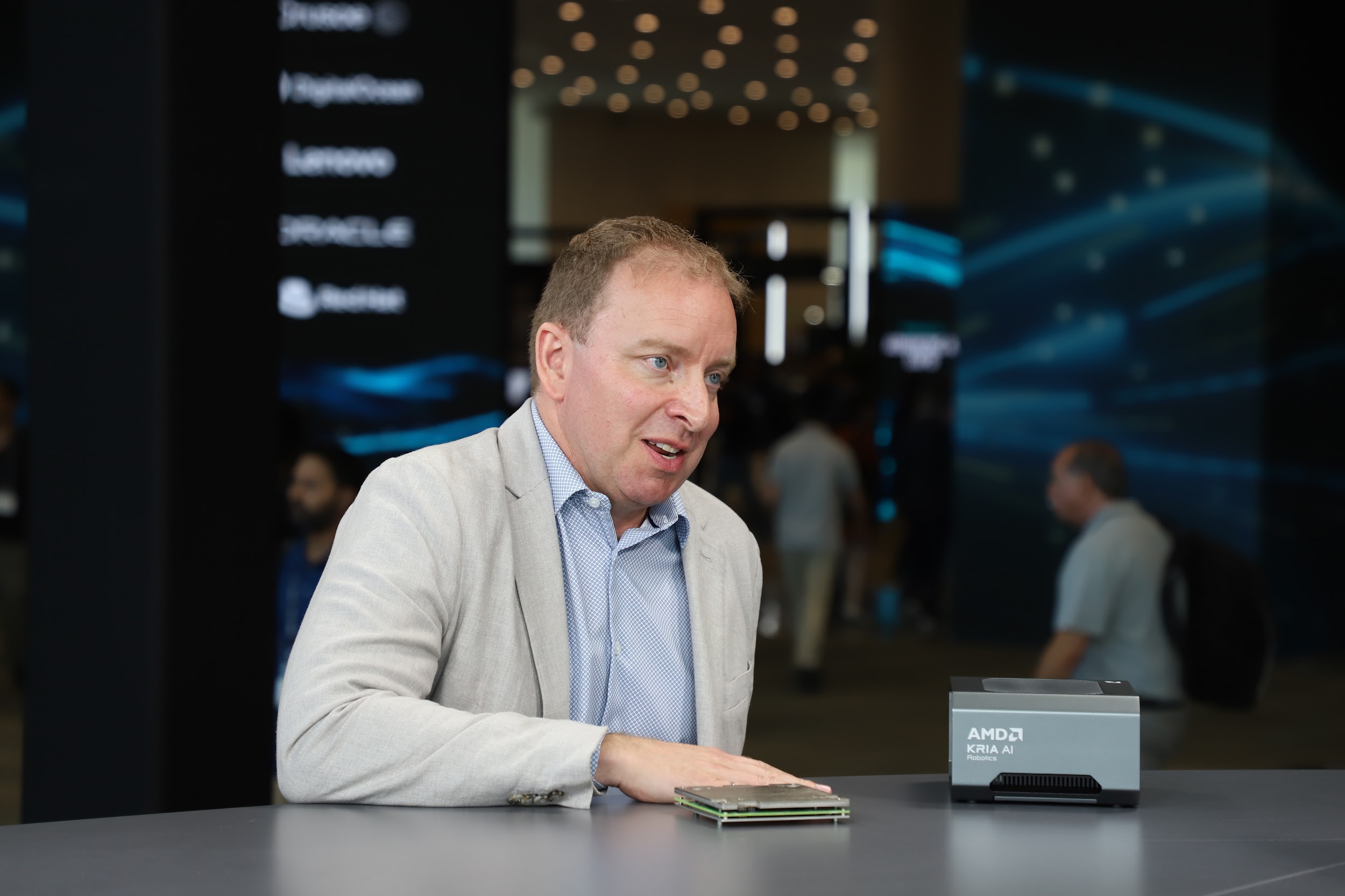
AMD is positioning an integrated compute stack for robotics and autonomous machines, making the AMD physical AI platform a broader pitch than GPUs alone. Kirk Saban, corporate vice president of product marketing and management at Advanced Micro Devices Inc., told theCUBE at the AMD Advancing AI event that agentic AI workloads in physical systems require both GPU and CPU compute, with FPGA technology used for sensor aggregation.
No pricing, revenue target, customer count or deployment timeline was disclosed in the discussion. The industry signal is still clear: AMD wants robotics developers and embedded-system builders to see the company as a full-platform supplier for autonomous systems, rather than as a component vendor competing only on accelerator performance.
What is AMD's physical AI platform?
AMD's physical AI platform, as described by Saban, combines GPU compute, CPU compute and FPGA-based sensor handling for machines that need to perceive, decide and act in real-world environments. The intended targets include humanoid robots, other autonomous robots and embedded systems across sectors such as healthcare, agriculture, automotive and industrial IoT.
Saban said autonomous robots need GPU resources for AI workloads, but also require CPU compute to run the broader autonomous functions. He described a humanoid robot as the strongest expression of agentic AI because the system has to connect model-driven decision-making with movement, sensing and control.
The FPGA element is central to AMD's argument. Saban said AMD's FPGA technology can aggregate sensor inputs across markets and can be reprogrammed for different applications. That matters for robotics teams because physical AI systems are usually built around mixed sensor sets, including cameras and interfaces such as MIPI, rather than a single standardized input path.
Why AMD is emphasizing openness and flexibility
Saban framed AMD's approach as open and developer-focused. He said the same hardware can be repurposed for different sensor combinations and use cases, reducing the need for a custom chip for each robot or autonomous system design.
That is a practical message for robotics companies, where hardware iteration is expensive and deployment environments vary widely. A warehouse robot, an agricultural machine and a healthcare device may all need perception and autonomy, but their sensor layouts, power constraints and control requirements can differ sharply. AMD's claim is that programmable hardware gives developers more room to adapt the platform across those differences.
Saban also said AMD can address what he called the full robot spectrum, including the spine, brain and joints of a robot. In product terms, that means AMD is trying to map its portfolio to several layers of robotic architecture: sensing, central compute and control systems.
What AMD did not say
The remarks did not include benchmarks, bill-of-materials comparisons, named robotics customers or details on how AMD's stack is packaged for commercial deployment. That leaves open the harder questions for buyers: software maturity, real-time performance, power consumption, developer support and integration cost.
The discussion took place during SiliconANGLE's theCUBE coverage of AMD Advancing AI. TheCUBE disclosed that it was a paid media partner for the event and said AMD and other sponsors did not have editorial control over the coverage.
This story draws on original reporting from SiliconANGLE.