42Gears cites three-year NPS run as UEM customer proof point
The endpoint management vendor reported NPS scores above 66 since 2024, pointing to demand for usable, secure tools for mixed device fleets.
By Dominic Okoye · Staff Writer
· 2 min read
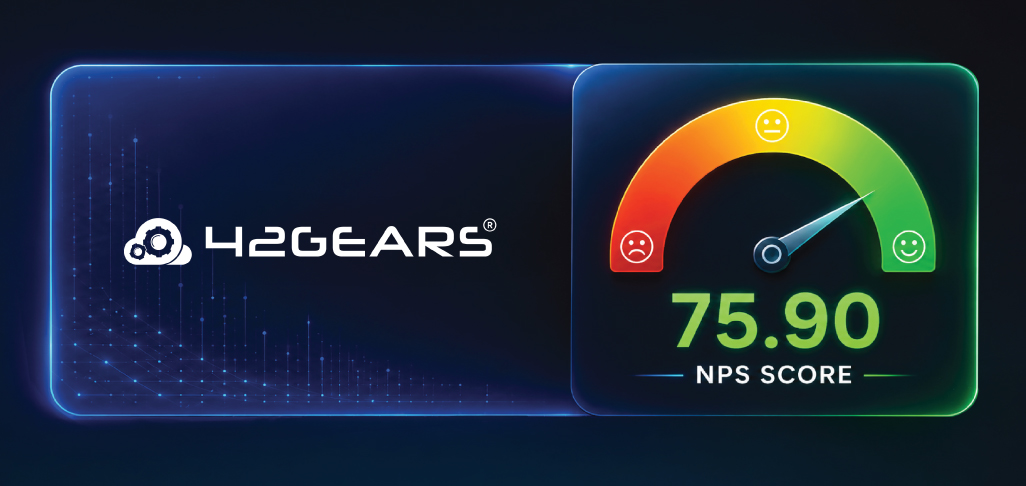
42Gears reported three years of high Net Promoter Score results for its unified endpoint management platform, with scores of 66.20 in 2024, 77.20 in 2025 and 75.90 year to date in 2026. The company did not disclose revenue, customer count, sample size or survey methodology, so the numbers read as a customer validation signal rather than a full operating benchmark.
For the enterprise software market, the announcement lands in a category where retention depends on practical execution: enrolling devices, enforcing security policies, supporting field hardware and keeping IT teams from drowning in exceptions. Unified endpoint management vendors are selling into fleets that often span office laptops, mobile devices, kiosks, scanners, wearables and rugged hardware used outside traditional corporate environments.
42Gears positions its platform for Android, iOS, Windows, macOS, Linux, rugged devices, wearables and other enterprise endpoints. Its target industries include retail, logistics, transportation, manufacturing, healthcare, construction and BFSI, a mix of sectors where device downtime can affect store operations, deliveries, clinical workflows or production lines.
NPS is a loyalty metric based on how likely customers are to recommend a product or service. Scores above 50 are generally treated as strong, while scores above 70 are often described as top-tier. By that yardstick, 42Gears’ 2025 and 2026 year-to-date figures suggest customers remain broadly positive on the product, though the absence of methodology limits comparisons with peers.
The company attributed the results to investments in customer support, product updates, usability and administrative visibility. It highlighted global support teams, feature releases aimed at security and simplified management, dashboards, remote management tools and real-time endpoint insights as areas customers value.
Those claims track with where buyers tend to scrutinize UEM products. Enterprises running mixed operating systems and purpose-built devices usually need more than baseline mobile device management. They need policy control, app and content management, remote troubleshooting and compliance reporting that work consistently across hardware types and deployment models.
Onkar Singh, co-founder and CEO of 42Gears, said the sustained NPS trend reflects the company’s work on multi-OS frameworks and named Android, Windows and iOS deployments as use cases where customers rely on the platform. The company is using the results to reinforce its standing in unified endpoint management for multi-OS device fleets, rather than announcing a new product, funding round or acquisition.
The broader demand signal is straightforward: device management remains a live budget item as companies standardize hybrid work tools and expand connected operations in the field. For vendors such as 42Gears, customer satisfaction scores can help support renewal conversations and competitive positioning, but buyers will still look for evidence in deployment scale, security performance and operating impact.