White House weighs pressure campaign against Chinese AI models
Axios says Commerce, the NSA and the White House have considered sanctions, warnings and liability rules that could push U.S. companies away from Chinese open models.
By Renata Fuchs · Policy Reporter
· 3 min read
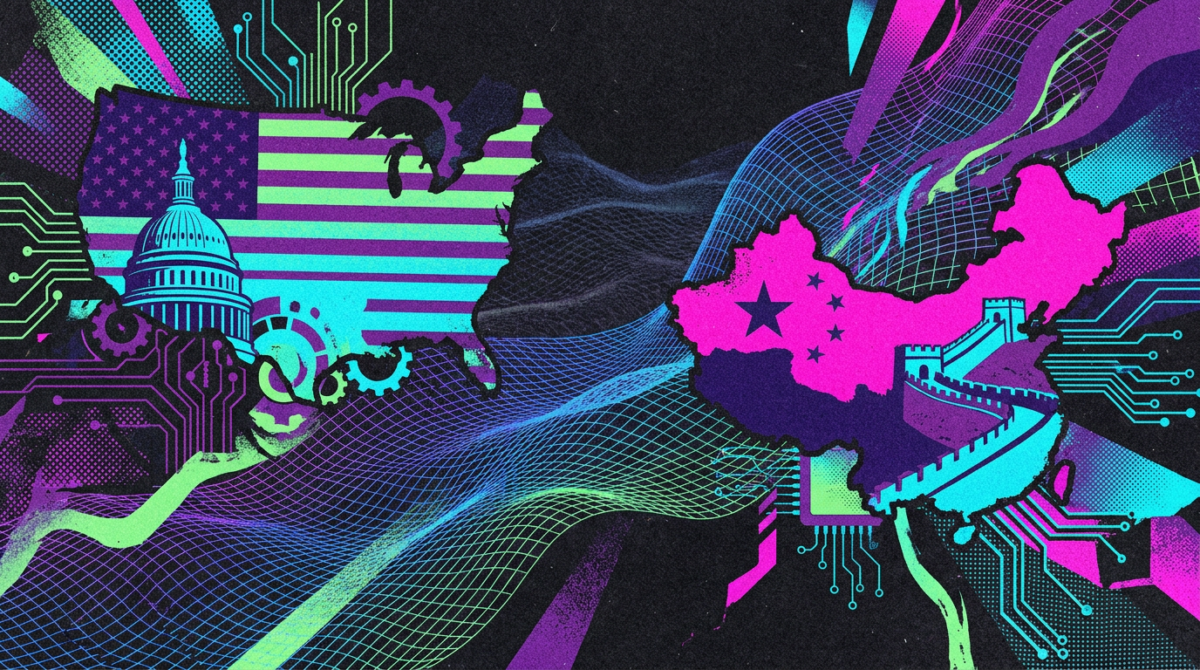
The Trump administration has considered a package of measures that could make Chinese AI models impractical for many U.S. companies to use, Axios reported. The work reportedly spans sanctions, security advisories and possible liability rules for U.S. firms that host Chinese models, a path that could curb adoption without a formal nationwide ban.
According to Axios, the Department of Commerce, the National Security Agency and the White House have looked at options since 2025. The measures under discussion include adding Chinese AI labs to sanctions lists, issuing government warnings about security risks and using an executive order to set security obligations for U.S. companies serving those models.
The Commerce Department drafted rules in summer 2025 aimed at protecting domestic supply chains from Chinese open-source models, Axios reported. Those efforts were initially blocked by advisers who preferred a lighter regulatory approach. Supporters of tighter controls have since gained more influence after personnel changes in the White House and the release of Kimi K3, a Chinese model that has put fresh pressure on U.S. labs on cost and capability.
A ban without a ban
A direct prohibition may be unnecessary if the administration can raise enough compliance risk. A person close to the government told Axios the approach taking shape is slower and more durable than a simple ban, relying on procurement rules, sanctions threats and public pressure aimed at U.S. companies using Chinese models.
That resembles a strategy recently described by Dean W. Ball, an OpenAI strategist, who wrote that regulators could create enough risk to push regulated enterprises away from Chinese models while avoiding measures so broad that major cloud providers stop serving them and push startups toward less reputable vendors.
Axios did not report a finalized executive order, a timetable, or a list of Chinese AI labs that would be targeted. For operators, that is the operative uncertainty: model choice could become a procurement and compliance issue before any binding ban appears.
Commercial stakes
The policy debate comes as Chinese open models are gaining U.S. users largely because they are cheaper and, in some tasks, close enough to Western frontier products. The Decoder has reported that U.S. companies including Snowflake, Databricks, Coinbase and Lindy have tested or adopted Chinese models for cost reasons, with Databricks making GLM 5.2 its default coding engine and Lindy moving off Claude for DeepSeek.
Restrictions would also protect the position of Google, OpenAI and Anthropic in the U.S. market. The Decoder has linked the issue to broader market exposure, noting that AI companies have driven much of the stock market's gains under Trump and that damage to major U.S. AI providers could ripple through public markets.
The security argument
The national security case is not imaginary. Open models can create cybersecurity risks because capable systems can be downloaded, modified and run outside the controls of a commercial API. The Decoder has reported that open-weight models now match some recent frontier cyber performance at much lower cost.
Those same models can also be used defensively. Hugging Face has said open systems can outperform commercial models in some cybersecurity work, including incident response. A U.S. crackdown could reduce exposure to Chinese models inside regulated enterprises, while doing little to stop adversaries outside the United States from using open models that are already available.
This story draws on original reporting from The Decoder.