OpenAI and Work Louder launch $230 controller for Codex agents
Codex Micro adds joysticks, programmable keys and status lights for managing AI coding agents, but quantities are limited and it is already out of stock.
By Wei-Lin Zhao · AI Correspondent
· 2 min read
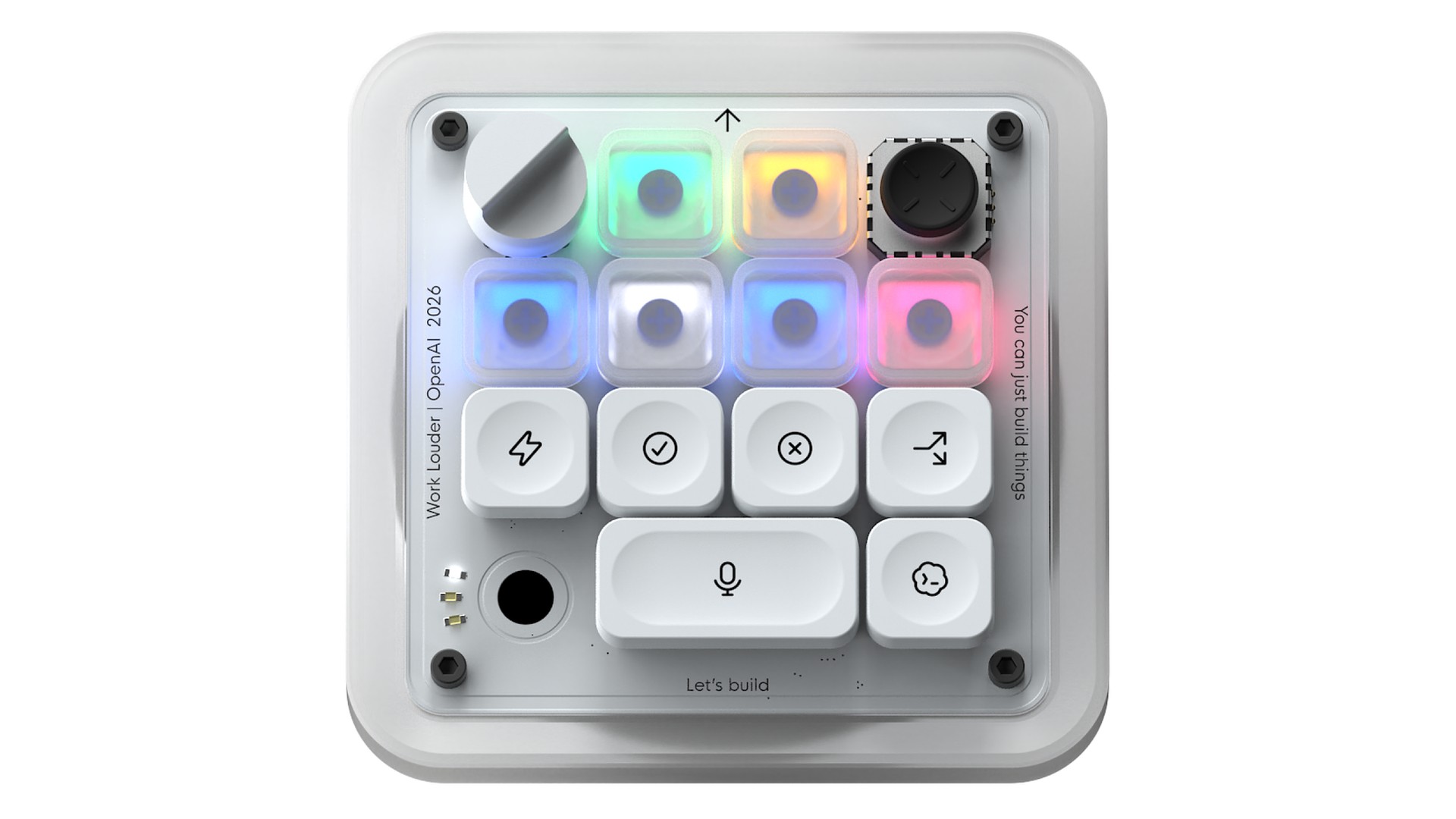
OpenAI and keyboard maker Work Louder have introduced Codex Micro, a $230 compact hardware controller for developers using AI agents in ChatGPT Codex. The product is a small but concrete move away from agent control through chat prompts alone, using physical keys, joysticks and a dial to run common coding workflows.
The device is currently out of stock, and Work Louder says availability is limited. OpenAI and Work Louder did not disclose how many units were made, when more will ship, or whether this is a one-off collaboration or part of a broader hardware program around Codex.
Codex Micro is designed to sit alongside a developer’s main keyboard rather than replace it. The top row includes six keys with RGB lighting that indicate agent status. OpenAI and Work Louder describe the lights as showing states such as thinking, working, waiting for input and finished; product imagery also shows error as a possible status state.
The joystick is mapped to agent actions that OpenAI and Work Louder describe as common developer tasks, including code review, debugging and refactoring. A rotary dial adjusts the reasoning level, which the companies describe as a way to set how much compute the model should spend on a task.
Programmable controls for Codex
The controller connects directly to ChatGPT Codex, where its keys can be reassigned. Work Louder’s Input software extends that customization beyond Codex, letting users assign shortcuts to each key, dial and joystick movement across six programmable layers.
The box includes 32 swappable icon keycaps, allowing users to match the physical labels on the device with their chosen bindings. Codex Micro supports Bluetooth and USB-C connections and works with both Mac and Windows systems, according to the companies.
The product is less notable for its hardware complexity than for what it says about the current shape of agent tooling. AI coding agents are increasingly being presented as parallel workers that need supervision, status tracking and intervention, rather than as single-turn assistants. Codex Micro packages that assumption into a desktop accessory: developers can see agent state at a glance and trigger preset actions without returning to a chat window for each command.
The unanswered questions are commercial rather than technical. At $230 and with limited supply, Codex Micro is closer to an enthusiast or power-user accessory than a mainstream developer input device. OpenAI and Work Louder have not shared sales targets, customer adoption data, or evidence that physical controls improve agent workflows. For now, the launch shows OpenAI testing how far the Codex interface can extend beyond software, with Work Louder providing the specialized keyboard hardware.
This story draws on original reporting from The Decoder.