HAQQ takes its legal AI engine to consumers with global mobile launch
The Beirut-founded legaltech startup is offering a free iOS and Android app built on the same engine used in its professional platform.
By Wei-Lin Zhao · AI Correspondent
· 3 min read
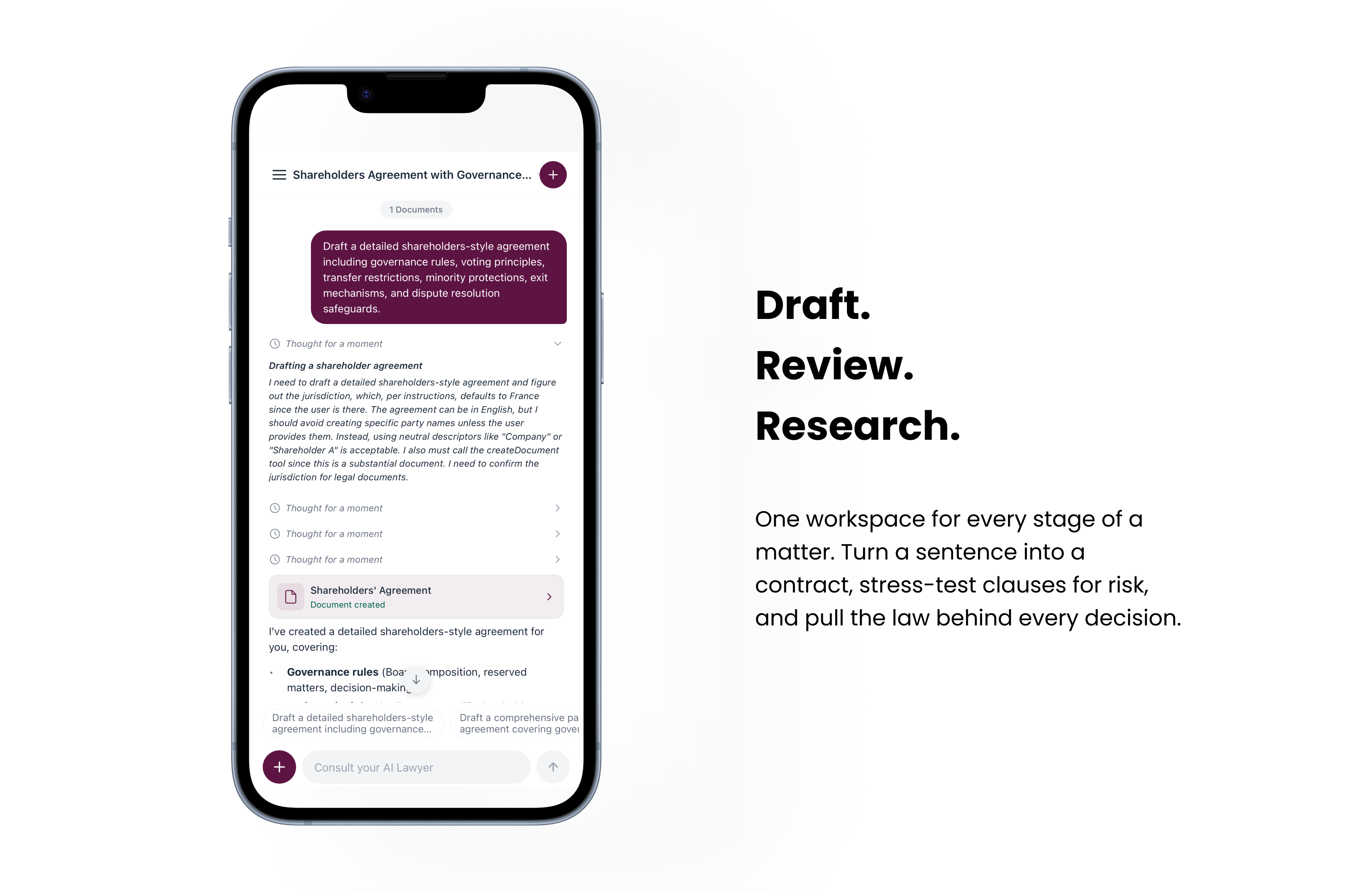
HAQQ has launched its mobile legal AI app worldwide on iOS and Android, taking the Justinian Legal AI Engine behind its professional product into a free consumer app. The Beirut-founded startup has raised $3 million in seed funding and says its law-firm platform has more than 15,000 signups across more than 80 countries, but it did not disclose revenue, valuation or headcount.
The move puts HAQQ in a growing category of legaltech companies trying to shift AI from lawyer-facing workflows into mobile self-help. The pitch is not that consumers can replace counsel with a chatbot, but that they can read contracts, employment offers and lease terms earlier, before a dispute or a missed clause becomes more expensive.
HAQQ says the app has passed 7,500 downloads since launching in May. The product lets users review contracts by clause, draft agreements, prepare notices, summarize legal language, assess risks and export structured legal work from a phone.
The company is positioning the app against general-purpose AI tools, which can produce fluent legal-sounding answers without the safeguards expected in legal work. HAQQ says Justinian was built for legal reasoning, jurisdiction-aware analysis and workflow-connected output, including risk tables, suggested revisions and exportable reports. It also says legal updates are reflected in the system when laws change, rather than relying only on a model’s training cutoff.
That distinction is the core product claim. Legal AI vendors are under pressure to show that their systems can do more than repackage large-language-model output, particularly in areas where mistakes can carry legal or financial consequences. For a consumer app, the harder problem is making legal help accessible without implying that software can take responsibility for legal advice.
Antoine Kanaan, HAQQ’s CEO and co-founder and a former practicing lawyer, framed the app as a starting point for users rather than a substitute for representation. “AI is not a replacement for the lawyer. It is the first step. You get a first opinion, then you go to the right specialized lawyer,” he said.
The company also points to access as part of the market opportunity. The World Justice Project estimates that 5.1 billion people have unmet legal needs globally. HAQQ’s bet is that mobile distribution can turn some of that demand into early legal triage, although the company has not disclosed retention, paid conversion plans or usage by jurisdiction.
Security and confidentiality are central to the product’s positioning. HAQQ says the platform uses encrypted infrastructure, does not train on private user data and includes jurisdiction-aware safeguards for legal work. Those features are table stakes for enterprise buyers, but bringing similar controls into a consumer-facing app could become a meaningful differentiator if users trust the output enough to bring it into real legal interactions.
The HAQQ mobile legal AI app is the company’s first consumer product. HAQQ’s broader platform combines legal AI chat, workflow infrastructure and practice management tools for legal professionals, enterprises and individuals.