Germany applies media rules to Google AI Overviews and Perplexity
German media regulators said AI search answers can be treated as providers’ own content, creating new compliance risk for Google and Perplexity.
By Renata Fuchs · Policy Reporter
· 3 min read
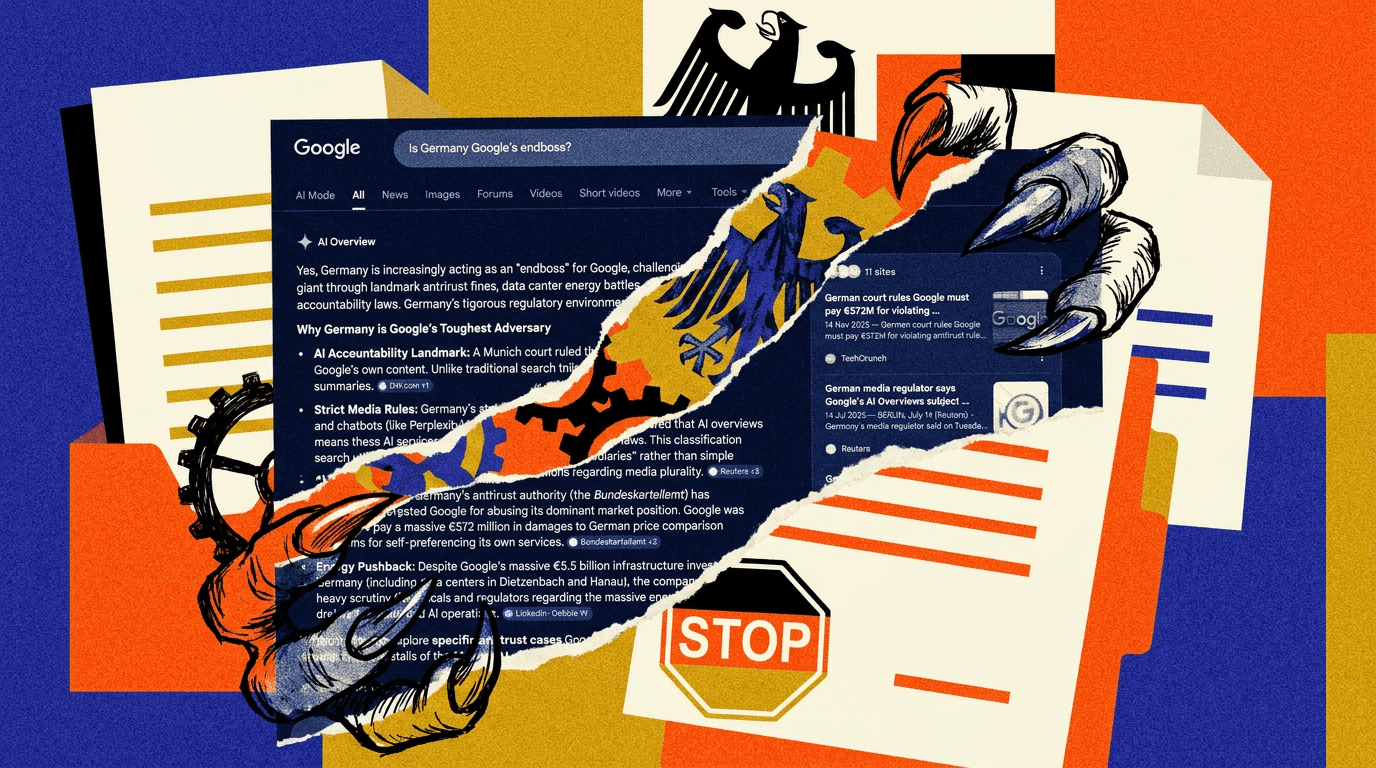
Germany’s Commission for Licensing and Supervision, known as ZAK, has issued rulings against Google and Perplexity that apply German media law to AI search and chatbot services for the first time. No fine or financial settlement was disclosed, but the decisions matter because regulators are treating generated answers as the companies’ own content, not as protected redistribution of third-party material.
ZAK said Google and Perplexity violated Section 109 of Germany’s State Media Treaty. The decisions are immediately enforceable, according to the regulator, and both companies have one month to appeal.
ZAK Chairman Dr. Thorsten Schmiege said AI search engines and chatbots are content providers and that German media law will be applied to them. The regulator’s position is that the Digital Services Act liability exemption for platforms carrying third-party content does not cover AI-generated responses, because those responses are produced by the service provider.
That framing raises the stakes for AI search products. If an AI answer is treated as original output by the platform, the service can face media-law obligations tied to transparency, ranking and discrimination, rather than relying only on rules designed for hosting or indexing third-party pages.
Google faces scrutiny over AI Overviews placement
The action against Google centers on AI Overviews, the company’s generated summaries that appear above conventional search results. ZAK alleges that Google has not met transparency requirements and has breached rules against discrimination by placing its own AI answers ahead of links to outside publishers, including journalistic sources.
Regulators argue that the placement changes the role of search. A ranked list of links sends users to outside sites. A generated answer can satisfy the query inside Google’s interface while relegating source links to a secondary position. ZAK says that matters for media diversity because the service controls which sources are visible and how prominently they appear.
Google has disputed research suggesting AI Overviews reduce publisher traffic, according to prior statements from the company referenced in reporting on the issue. The company has not disclosed internal traffic data in the material cited by German regulators.
The German position also tracks a recent Munich court ruling involving Google’s AI-generated search text. That court treated AI output as separate content made by combining and analyzing information from multiple third-party sites, and held Google liable over false claims. Google has said it will appeal that ruling.
Perplexity case focuses on local compliance disclosures
The Perplexity ruling appears narrower so far. ZAK said the company lacks a designated representative in Germany and has not provided required transparency disclosures. The regulator’s broader theory still applies to chatbot-style search products when they select, cite or display third-party sources for users.
Schmiege said services that determine whether content is found through link selection and placement must disclose how that process works, or diversity among journalistic and editorial offerings is at risk.
A related legal opinion commissioned by German media authorities from Professors Jan Oster and Christoph Busch supports that approach. The authors argue that AI search changes discovery by replacing a set of links with a single written answer, which can reduce traffic to original sources and pressure journalism’s business model. They recommend creating a separate category for AI search engines under state media law.
Google has also introduced a “Preferred Sources” feature, which lets users choose publications they want to see more often in search. The rulings do not say whether that kind of user control is enough to satisfy German regulators. For AI search companies, the unresolved issue is whether source controls and disclosures can offset the legal risk created when the answer itself becomes the product.
This story draws on original reporting from The Decoder.