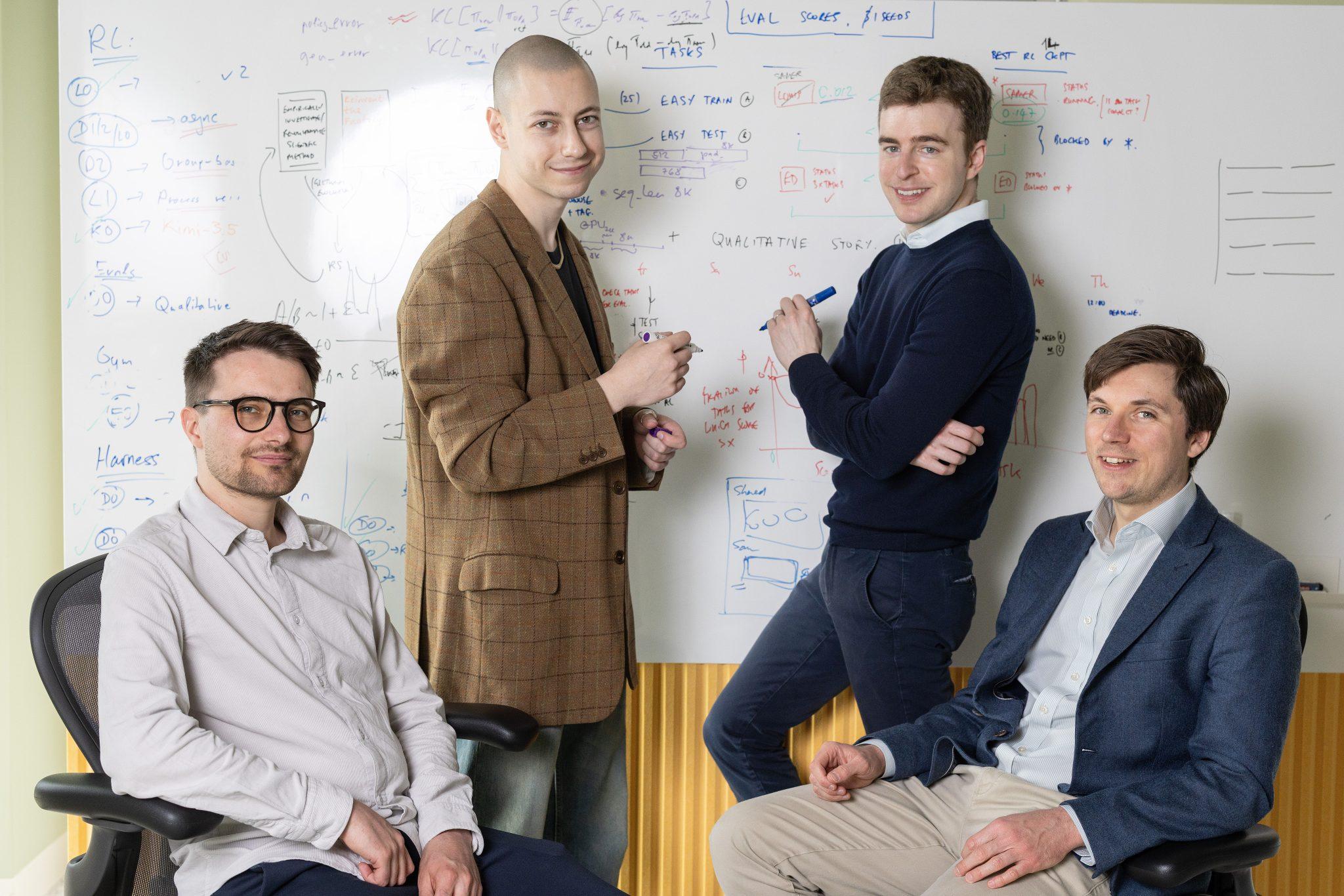
Microagi raises $55 million seed round for robotics training data
The Munich startup, founded by former Formula 1 engineers, is collecting factory and home task data to train humanoid robots.
By Marcus Adeyemi · Startups Editor
· 3 min read
Microagi, a Munich robotics startup founded about 10 months ago by former Formula 1 engineers, has raised $55 million in a seed round that Sifted reported as Germany’s largest to date. The financing, led by Hummingbird with participation from Northzone, LocalGlobe, Village Global and Redalpine, puts fresh capital behind a European bet that humanoid robots will need large amounts of proprietary task data before they can work reliably in factories and homes.
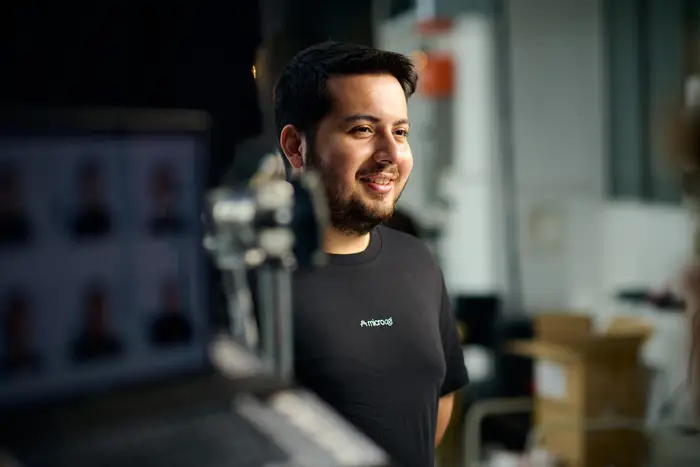
The company did not disclose its valuation, revenue, customer count or headcount. Its pitch is centered on data collection rather than robot hardware: Microagi sends people into factories and homes wearing head-mounted cameras to record tasks including sorting objects and washing dishes, then uses that material to train systems for humanoid robots.
CEO Bercan Kilic told Sifted that the size of the round was “one-billionth of what Europe needs,” framing the raise as small relative to the automation investment he says the region requires. Kilic, formerly of Red Bull Racing, argued that Europe’s manufacturing sector has lost capabilities after decades of moving work offshore and has become less price-competitive as a result.
That is a broad industrial claim, and Microagi has not disclosed operating metrics that would show how close its system is to replacing or augmenting workers at scale. The company is entering a field where capital is moving ahead of clear deployment timelines, especially for humanoids intended to handle varied physical tasks rather than tightly constrained factory motions.
How Microagi is building its training set
Microagi’s approach depends on gathering real-world activity from customer environments. CTO Nico Nussbaum told Sifted the company places engineers on-site with each customer, using what the system learns from actual operations to improve the next run. He said customers get incrementally further ahead each month the company remains embedded with them.
The strategy reflects a central uncertainty in robotics AI: Kilic said nobody knows how much training data will be required. Startups in the category are acting as if the answer is a lot, which creates an advantage for companies that can access repetitive, commercially useful tasks and record them at volume.
Kilic told Sifted that he sees western companies as more advanced in training models, while China is ahead in robot hardware. That split matters for European robotics startups, which may have to prove software and data advantages while relying on hardware ecosystems that are developing quickly elsewhere.
Timelines remain unsettled
Microagi is raising into a robotics market where investors and founders disagree sharply about when humanoids will be productive outside demos. Sifted reported that at Machina, a robotics event in Paris, one investor said it could take 10 years before a robot can iron a shirt without human help.
Kilic offered a shorter timeline for narrower work. He predicted that within a year a humanoid robot will be able to perform around 10 routine tasks autonomously, while more complex work such as plumbing will take much longer.
The round is large for a seed-stage European company and notable for Germany, but the unanswered questions are standard for the category: how much usable data Microagi can collect, how defensible that data becomes, and when customers will pay for production systems rather than pilots.
This story draws on original reporting from Sifted.