Paris hotel elevator display exposes Core i5 PC at BIOS screen
The Register reported that a Paris hotel elevator signage screen stalled at an American Megatrends BIOS screen, showing a 10th-gen Intel Core i5 and 8GB of RAM.
By Dominic Okoye · Staff Writer
· 3 min read
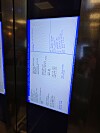
A Paris hotel elevator display appears to have failed into an American Megatrends BIOS setup screen, exposing the PC behind what was likely intended to be digital signage. The Register reported the sighting after a reader, Nathaniel, spotted the screen in a hotel it identified as apparently a Novotel near the Eiffel Tower.
The episode is minor operationally, but familiar to anyone who has deployed kiosks, retail screens or in-building media systems: commodity PCs often sit behind simple displays, and their failure modes can be more revealing than their intended content. In this case, the screen did not show hotel information, restaurant promotions or elevator media. It showed firmware configuration details.
According to The Register, the machine visible on the screen used an Intel Core i5-10210U, a Comet Lake mobile processor launched at the end of 2019. The system also showed 8GB of RAM, apparently DDR4-2666, a memory type supported by that processor. The publication noted that the chip could be paired with Intel UHD graphics.
Those specifications are ordinary for a laptop-class PC from the period, and more than enough for a screen whose likely job is to display static or lightly animated hotel messaging. The Register characterized the setup as overpowered for elevator signage, though no procurement details, vendor name, operating system or signage software were disclosed.
What the failure shows
The visible BIOS screen matters less as a one-off glitch than as a reminder of how much general-purpose computing is embedded in routine building infrastructure. Digital signage vendors frequently use standard x86 hardware because it is cheap, available and easy to support. The trade-off is that a failed boot or misconfigured device can expose low-level system information to anyone standing in front of the display.
The i5-10210U is part of Intel’s 10th-generation Core family and, as The Register noted, is compatible with Windows 11 requirements. There is no indication from the report that Windows 11 was installed on the device, only that the processor would qualify. The report also did not say whether the elevator controls themselves were connected to the same machine. Based on the described placement, the visible system appears to be used for signage rather than lift operation.
For hotel operators and facilities teams, the practical lesson is prosaic: signage endpoints need the same fleet management basics as office PCs. That includes boot recovery settings, remote monitoring, physical access controls and a plan for what a public-facing screen shows when the content player fails.
The Register’s report does not indicate how long the display remained at the BIOS screen or whether the hotel fixed it. It does, however, give a clear snapshot of a familiar pattern in commercial technology deployments: a simple customer-facing function backed by a fairly capable PC, with the whole stack made visible by an unglamorous boot failure.
This story draws on original reporting from The Register.