Self Inspection funding raises $10 million for vehicle-condition data platform
SBVP led the $10 million round as auto-finance and aftermarket backers bet on standardized vehicle-condition records.
By Ingrid Halvorsen · Venture Capital Reporter
· 3 min read
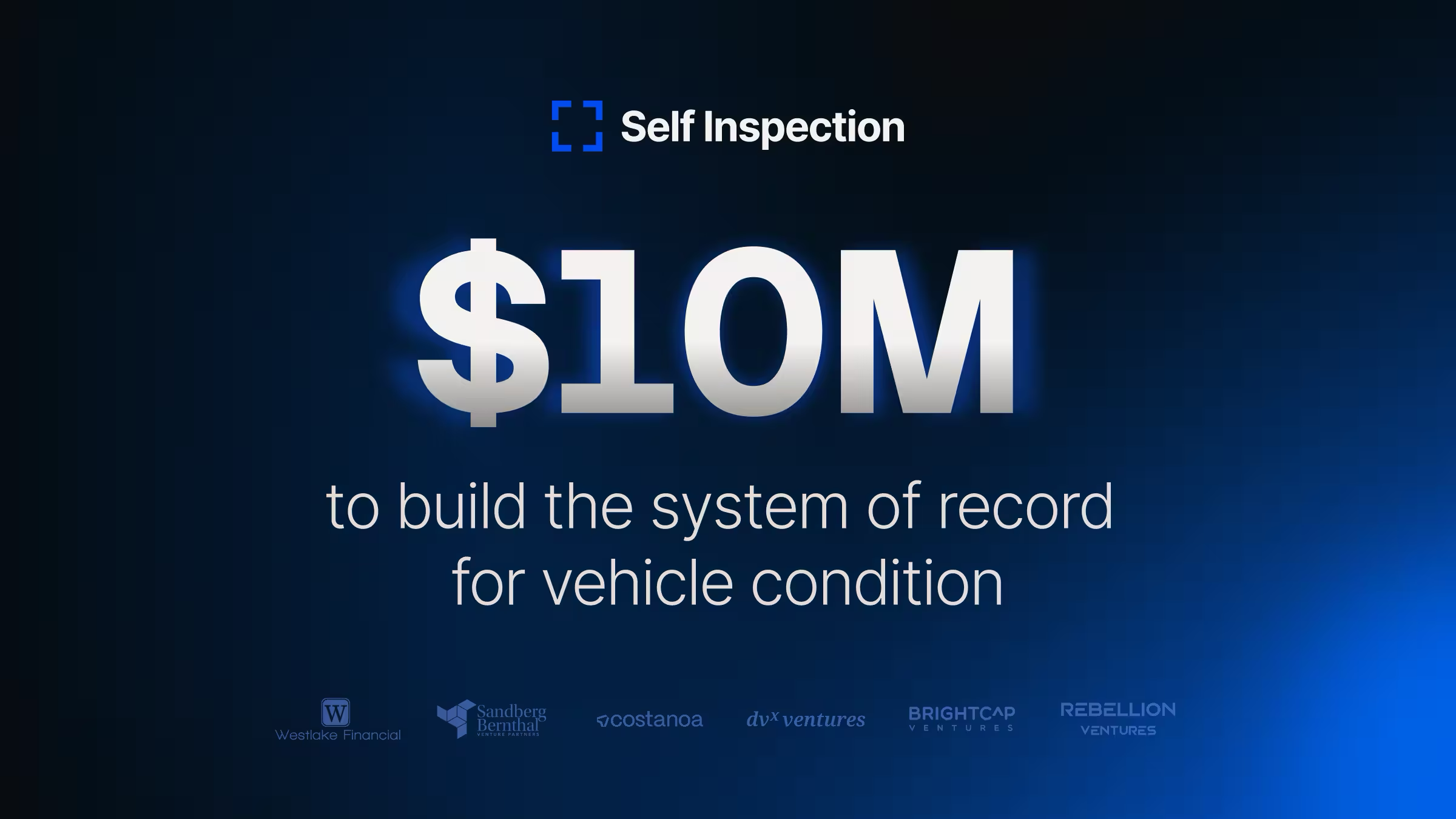
Self Inspection has raised $10 million in funding led by Sandberg Bernthal Venture Partners, adding strategic backing from U.S. AutoForce and Westlake Financial for its effort to turn vehicle-condition data into a shared record used across auto finance, fleets, dealers and resale channels. The Self Inspection funding round puts another marker down for AI infrastructure in automotive commerce, where a car’s physical state can affect underwriting, lease returns, remarketing and disputes.
Valuation, revenue and headcount were not disclosed. The round also included Costanoa Ventures, Rebellion Ventures and BrightCap Ventures, along with earlier backers DVx Ventures, the firm founded by former Tesla President Jon McNeill, and Karim Bousta, a former Tesla vice president of worldwide service.
The investor mix is the point of the announcement. U.S. AutoForce is a tire distributor and division of U.S. Venture, while Westlake Financial is a large North American auto lender. Their participation signals that vehicle-condition records are becoming relevant beyond inspection workflows, particularly for companies that finance, service, repair, resell or insure vehicles.
What is Self Inspection building?
Self Inspection is building what it calls a system of record for vehicle condition: a persistent, standardized file describing a car’s physical state over time. In practice, that means smartphone-based image capture, AI-assisted damage detection, condition reports and inspection histories that can be reviewed later by counterparties in a transaction.
The broader category is often described as vehicle condition intelligence. The idea is to convert a walkaround, paper form or one-off inspection into structured data that can move through dealer, lender, fleet, marketplace and service systems without being recreated at each handoff.
That is a practical problem in used-car commerce and auto finance. Vehicles can pass through rental fleets, lease-end programs, auctions, dealerships and online marketplaces, with each party making decisions on condition data that may be incomplete, inconsistent or trapped in separate systems. Standardization is the commercial premise: if condition data can be captured the same way each time, it can become more useful for pricing, claims, compliance and resale.
Self Inspection’s product runs on a phone and guides users through image capture. The platform then identifies damage, generates a condition report and attaches the record to the vehicle. The company positions the output for underwriters, remarketing teams, fleet operators, service organizations and compliance teams rather than only for frontline inspectors.
Self Inspection says it has completed more than 1 million inspections across rental fleets, auto finance companies, auctions and marketplaces. Customers have reported more than 300,000 operational hours saved and more than $80 million in cost reductions, according to the company. Stellantis Financial Services uses the platform for lease-end inspections and corporate vehicle management.
CEO Constantine Yaremtso framed the market shift by comparing condition records with vehicle-history reports, which became a standard input in many automotive transactions. “Our job is to be the source of truth for it, one record, one standard, that follows the car for its entire life,” Yaremtso said.
The new capital is earmarked for product work, AI development and deeper enterprise deployments. Self Inspection also plans to expand across North America and Europe, where more buying, financing, servicing and remarketing activity is moving through digital channels. The company’s vehicle condition intelligence platform sits in a crowded enterprise sales cycle, but the backers in this round show why automotive incumbents are paying attention to standardized condition data as a potential infrastructure layer.