Safe Superintelligence Nvidia investment may be worth $5 billion
NVIDIA is backing Ilya Sutskever’s SSI with equity and Vera Rubin access, with Bloomberg reporting the investment is about $5 billion.
By Marcus Adeyemi · Startups Editor
· 3 min read
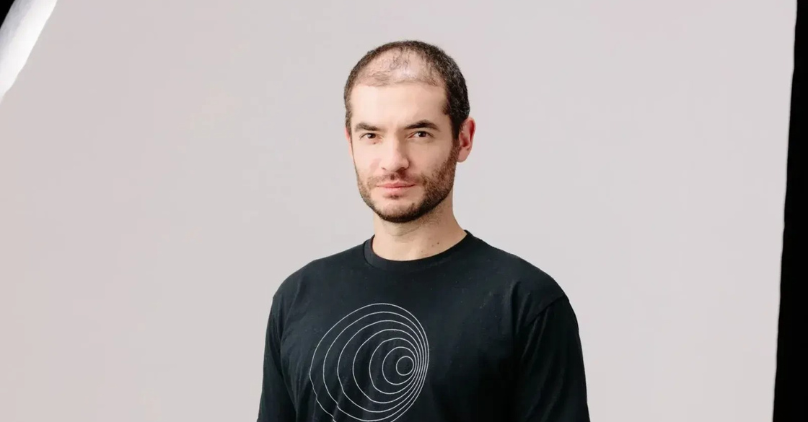
NVIDIA has signed a strategic investment and compute agreement with Safe Superintelligence, the AI lab started by OpenAI co-founder Ilya Sutskever and Daniel Levy in 2024. The Safe Superintelligence NVIDIA investment was not priced by the companies, but Bloomberg reported, citing people familiar with the matter, that it is worth about $5 billion, making it a large bet on a frontier AI lab with no disclosed product or revenue.
The deal gives SSI long-term access to NVIDIA’s next-generation Vera Rubin computing platform. SSI said the partnership will expand its compute capacity by an order of magnitude and said NVIDIA pursued the agreement after seeing parts of the lab’s closely held research program.
NVIDIA chief executive Jensen Huang framed the investment around Sutskever’s track record in AI research. “Ilya has pioneered fundamental breakthroughs at the foundation of modern AI. We’re excited to see what new breakthroughs SSI will discover powered by our Vera Rubin platform,” Huang said.
Why did Nvidia invest in Safe Superintelligence?
SSI says it is building safe superintelligence as a single-purpose research lab rather than selling a near-term commercial product. That makes the deal less like routine vendor financing and more like NVIDIA using its balance sheet to secure proximity to frontier model research and future demand for its chips.
The structure is familiar in the current AI cycle: NVIDIA invests in a lab or infrastructure company, the company gains access to NVIDIA hardware, and NVIDIA strengthens the customer base for its own compute roadmap. Critics of similar deals have called that pattern circular financing, because investor money can return to the investor through chip purchases or capacity commitments.
SSI has already raised $3 billion across two rounds, including a $2 billion round at a $32 billion valuation. Its backers have included Alphabet, NVIDIA, Andreessen Horowitz, Lightspeed Venture Partners, Greenoaks and DST Global, according to prior reporting by Tech Funding News.
What is Safe Superintelligence?
Safe Superintelligence, also known as SSI, is an AI research company founded in 2024 by Ilya Sutskever and Daniel Levy. The company describes itself as a straight-shot lab focused on safe superintelligence, and it has not disclosed a commercial product, customer base or revenue.
That absence is central to how investors and operators will read the NVIDIA deal. A $5 billion investment, if Bloomberg’s reported figure is accurate, would be based on research access, founder reputation and expected compute intensity rather than current business metrics.
The OpenAI financing backdrop
The SSI agreement comes as NVIDIA’s AI investment strategy faces renewed scrutiny. Bloomberg reported on July 27, 2026, that NVIDIA is negotiating a financing package with OpenAI that could exceed $600 billion.
NVIDIA has made more than $40 billion in AI equity investments in the first four months of 2026, according to Tech Funding News tracking. PitchBook data cited by Tech Funding News puts NVIDIA’s AI dealmaking at about $53 billion across 170 transactions since 2020.
Those deals include a $30 billion stake in OpenAI and a $10 billion investment in Anthropic. CoreWeave is another cited example: NVIDIA owns equity in the company and has a $6.3 billion agreement to buy back unused compute capacity through 2032.
NVIDIA generated close to $200 billion in annual revenue last year and has a market capitalization above $5 trillion, giving it far more room than its portfolio companies to absorb failed bets. SSI now adds a research-only case to the debate over whether AI compute spending is backed by durable demand or by financing structures that keep the cycle running.
This story draws on original reporting from TechFundingNews.