Greyparrot Series B brings in $27M for AI waste data expansion
Greyparrot raised a $27 million Series B led by Omar Mir to expand its AI waste analytics systems in North America and Europe.
By Ingrid Halvorsen · Venture Capital Reporter
· 3 min read
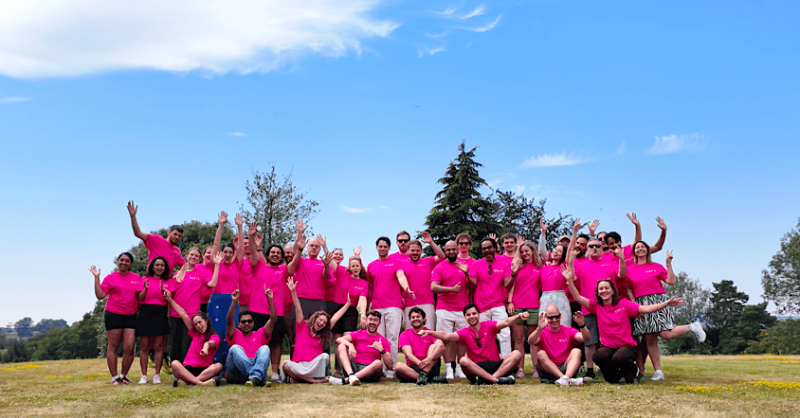
Greyparrot raised a $27 million Series B led by Omar Mir, bringing the London AI waste intelligence company's total funding to $60 million. The Greyparrot Series B gives the company more capital to sell data products into recycling plants and packaging companies, a segment where most material flows are still estimated rather than measured.
The company did not disclose its valuation, revenue or headcount. Mir is an International Board Member at World Wide Technology and an adviser to King's Trust International on AI and advanced technology. According to Greyparrot, he has previously built an $18 billion AI infrastructure business and worked with Google, Microsoft, Anthropic, AMD and OpenAI.
Greyparrot CEO and co-founder Mikela Druckman said the funding will support expansion across North America and Europe, including additions to its AI, data science and product teams. The company is pitching waste data as infrastructure for recovering more value from discarded materials, though it has not said how much of its current business comes from plant operators versus brands or other customers.
What does Greyparrot do?
Greyparrot sells camera-based Analyser systems that are installed above conveyor belts in recycling facilities. Its AI identifies materials, products and brands as waste moves through sorting lines, giving operators faster feedback on composition and contamination than manual checks.
The company was founded in 2019 by Druckman, Ambarish Mitra and Nikola Sivacki. Mitra previously co-founded Blippar, while Druckman was Blippar's chief commercial officer before becoming Greyparrot's CEO, giving the team a background in computer vision before applying it to recycling operations.
Greyparrot says its Analyser systems have now passed 1 trillion waste detections across deployments in more than 20 countries. The company estimates those detections include 17.4 billion PET bottles and 4.2 billion aluminium items, representing about $2.5 billion in recoverable value. It also says customers have reported sorting efficiency gains of 10% to 30%, a claim that depends on customer baselines the company did not disclose.
The broader data gap is the opening Greyparrot is trying to commercialize. The world discards 2.3 billion tonnes of waste each year, while less than 0.1% is measured, according to figures cited by the company. For recycling operators, Greyparrot says its systems can flag purity problems in minutes rather than after a shipment is rejected. For consumer brands, the data can show whether packaging described as recyclable is actually recovered in facilities.
How does this compare with AI recycling hardware companies?
Greyparrot's bet is more software and data-heavy than several adjacent companies in AI recycling. AMP Robotics, one of the best-funded U.S. companies in the category, builds robotic sorting systems and raised $91 million in Series C funding in 2024, taking its total funding to about $267 million. Recycleye, another London company founded in 2019, built AI-guided robotic and optical sorting technology and was acquired in April by CP Group, a U.S. materials recovery facility manufacturer.
Other incumbents, including Bulk Handling Systems and TOMRA, sell sensor-based sorting machinery with AI features. Greyparrot's position is that it can sit above existing plant equipment by providing the data layer operators and brands use to measure material flows.
There are early signs of institutional use. In the first quarter of 2026, the U.K. Environment Agency began accepting Greyparrot's AI-derived waste composition data for statutory compliance reporting from customers Biffa and FCC. In May 2026, Greyparrot began working with Kenvue to validate packaging recyclability through its Deepnest platform.
The market opportunity is large, but the category remains fragmented. Grand View Research valued the global waste management market at $1.5 trillion in 2025 and projected it would reach $2.4 trillion by 2033, a 6% compound annual growth rate. Greyparrot's next test is whether waste analytics can remain a standalone business as equipment makers add more AI features to their own platforms.
This story draws on original reporting from TechFundingNews.