Freehand raises $75M to expand AI supply-chain agents
Battery Ventures and NewRoad co-led the round for Freehand, whose AI agents are used by Meta, Unilever, Pfizer and others.
By Marcus Adeyemi · Startups Editor
· 3 min read
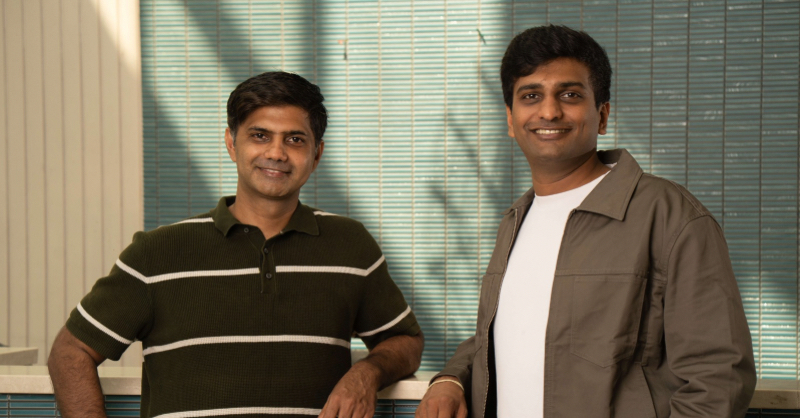
Freehand raises $75M in new funding to expand AI agents that run supply-chain finance and procurement tasks for large enterprises. Battery Ventures and NewRoad Capital Partners co-led the round, with participation from PSP Growth, chaired by former U.S. Commerce Secretary Penny Pritzker, and Nexus Venture Partners.
The San Francisco company says its agents are already in use at Meta, Unilever, Johnson & Johnson, Pfizer, Dunkin’ and Cardinal Health. The disclosed funding details did not include Freehand’s valuation, revenue or headcount.
Freehand is targeting a part of enterprise operations that still depends heavily on a mix of older procurement systems and outsourced labor. The company says U.S. businesses spend $16 billion a year on related software and $348 billion on people to perform work that software does not handle. It also points to Bureau of Economic Analysis data showing that American companies spend more than $20 trillion annually on materials, logistics, data centers and services.
What does Freehand's AI do?
Freehand’s agents are designed to perform supply-chain work inside enterprise systems, including reading supplier contracts, negotiating rates, approving invoices, processing payments and reconciling records. The company says the agents use a Category Context Graph that combines structured company data with contracts, emails and other documents before taking action.
That positioning matters because much of the enterprise AI market still sells assistance rather than execution. Freehand co-founder and CEO Nitin Jayakrishnan described the company’s work as part of a move toward autonomous enterprise operations, while co-founder Abhijeet Manohar has argued that context is what separates an agent that acts from a chatbot that only suggests.
Freehand was founded in 2024 by Jayakrishnan and Manohar. The two previously built Pando, an enterprise logistics software company that served manufacturers and logistics companies before being acquired.
What results has Freehand reported?
Freehand says customers have recovered 5% to 10% of supply-chain spend in complex categories, completed workflows five to seven times faster and cut procure-to-pay cycles by more than 70%. Those figures are company-reported customer outcomes, and the company did not break them down by customer in the disclosed materials.
Unilever is one named customer presenting the deployment as more than a test. Matt Algar, Unilever’s global vice president of supply chain, said Freehand is among the company’s first full-scale agentic deployments and part of a move from software that supports supply-chain teams to software that operates parts of the supply chain.
The round also creates an interesting overlap for Battery Ventures. Battery has backed Coupa, the enterprise spend-management platform, and is now backing Freehand as it automates work adjacent to procurement software. Dharmesh Thakker, a general partner at Battery, is joining Freehand’s board.
Freehand is entering a crowded agentic AI market that has drawn large rounds across specialized enterprise verticals. Harvey raised $200 million at an $11 billion valuation in March 2026, Norm AI secured $120 million at a $1.2 billion valuation, Abridge raised $300 million at a $5.3 billion valuation, and Writer raised $200 million at a $1.9 billion valuation, according to the reported funding data.
Freehand plans to use the capital to move beyond invoice processing into additional supply-chain categories, including direct materials and maintenance, repair and operations spend. Grand View Research estimates the global supply-chain management market was worth about $32.9 billion in 2024 and projects it will exceed $76 billion by 2030.
This story draws on original reporting from TechFundingNews.