Oak debuts with $60 million seed round for identity security
The Tel Aviv startup says its platform maps application and AI-agent access rights to flag risky permissions across enterprises.
By Colin Brandt · Enterprise Reporter
· 3 min read
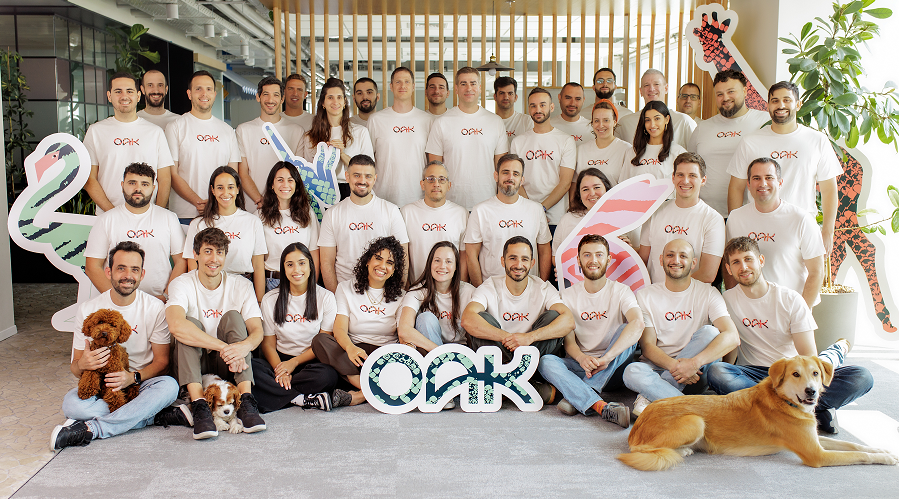
Oak Inc. launched with $60 million in seed funding to sell identity security software for enterprises managing employee and AI-agent access. Accel, Greylock Partners and CRV led the seed round, with participation from Hetz Ventures, AlphaDrive Ventures and several angel investors the company did not name.
The company did not disclose its valuation, revenue, headcount or customer count. Oak said it will use the capital to expand its engineering team, a routine but costly next step in a security category where product depth and integrations tend to determine whether a vendor can get past pilots.
Based in Tel Aviv, Oak is led by Chief Executive Shai Morag, who has founded three cybersecurity companies before this one. According to Oak, one of those startups was acquired by Mellanox, the networking company Nvidia bought in 2020. The other two were sold to Palo Alto Networks and Tenable.
Identity sprawl, now with AI agents
Oak is pitching into a familiar enterprise problem: large companies have employees with accounts across many applications, and access rights often outlive the business need that created them. The company adds a newer wrinkle, saying AI agents are now another class of identity that can touch multiple systems and accumulate permissions.
Oak says its platform builds a map of access rights across a corporate network. The software identifies employee application accounts and AI agents, then uses that inventory to surface potential security gaps. The company did not name specific applications supported by the product or provide deployment numbers.
One area Oak highlights is separation of duties, a control meant to prevent one person from holding conflicting permissions inside a sensitive system. In practice, that can mean limiting whether an employee who can retrieve database files can also alter the access logs tied to that database. Oak says its software can find accounts that violate those kinds of controls.
The company also says the product flags AI agents with access to tools they do not need for their assigned work. That is a concrete risk if an agent is compromised, though Oak did not provide data on how often customers are finding that issue or how the product compares with existing identity governance and administration platforms.
Natural-language console and automated fixes
Oak presents findings through a conversational interface similar to ChatGPT, according to the company. Administrators can use natural-language prompts to ask for more context about an issue and receive remediation suggestions.
The startup says the system can also carry out some fixes automatically. Before doing so, Oak says the platform shows administrators a step-by-step remediation plan and asks for approval. That approval step matters in identity workflows, where an automated change can break an employee’s access to a business-critical system as easily as it can reduce risk.
Oak collects the data behind its risk analysis through prebuilt integrations with commonly used software products. The company says connector setup for such systems can take months in some cases, while its platform can reduce that work to a few days. Oak also claims it can gather telemetry from systems that do not expose an application programming interface for connector developers, though it did not explain the mechanism.
“I’ve built several companies in this space, so I understand why identity has stayed broken for so long,” Morag said. “The tools were never built to work as one, and adding more of them was never going to fix it.”
The round gives Oak a sizable seed-stage balance sheet in a crowded security field. Its next test is whether it can turn the AI-agent access argument into budget, beyond the broader identity cleanup work enterprises have been trying to automate for years.
This story draws on original reporting from SiliconANGLE.