BastionGPT expands clinical document processing with OCR and AI vision
BastionGPT added OCR and native AI vision for large clinical record sets, aiming to turn source files into clinician-reviewed drafts.
By Wei-Lin Zhao · AI Correspondent
· 3 min read
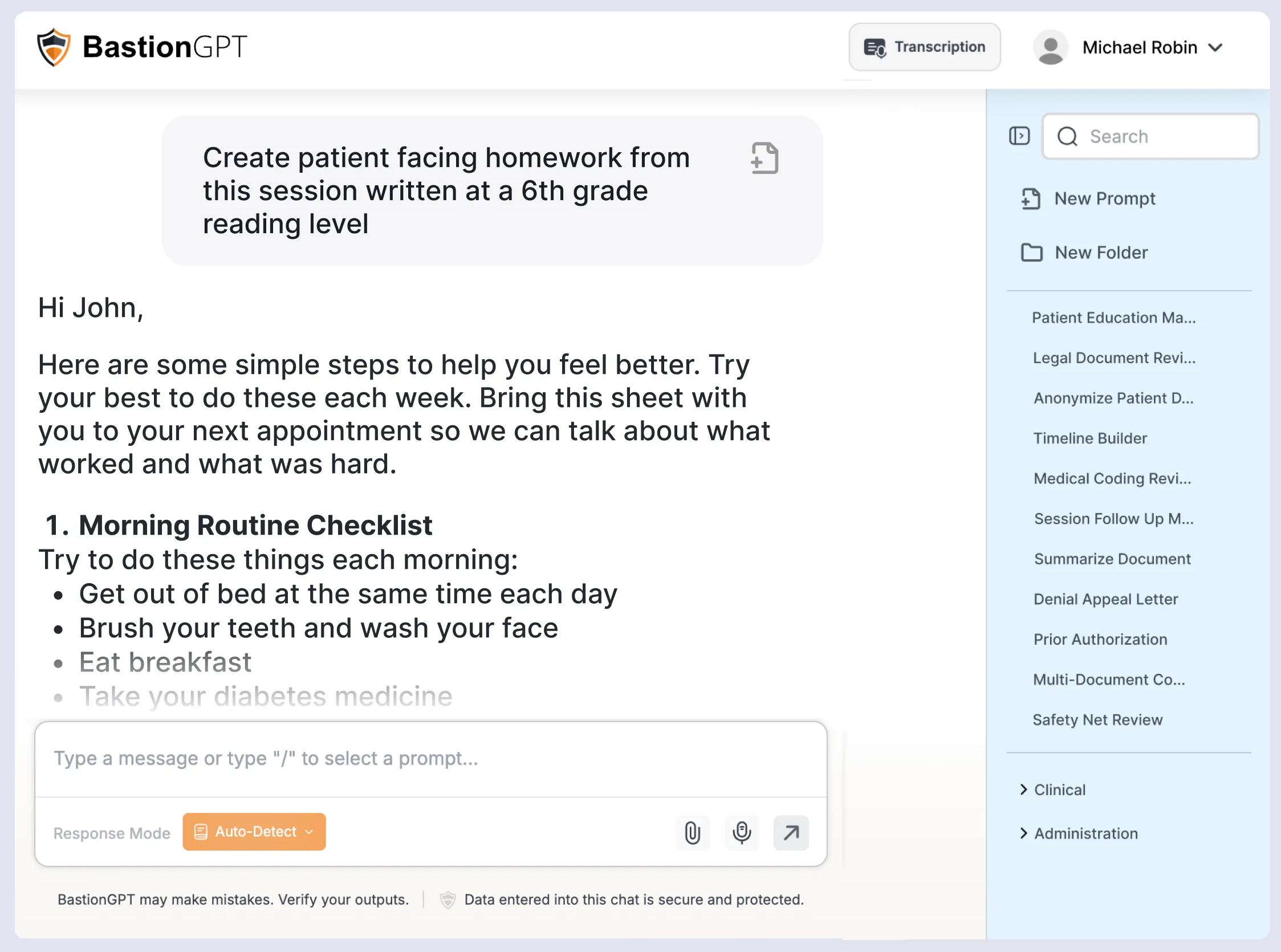
BastionGPT has released an upgrade to its clinical document processing, adding OCR and what Bastion Intelligence describes as native AI vision for scanned records, charts and tables. Announced August 3, the update is available to existing users at no additional cost, according to the company; no funding, revenue, pricing or customer-growth figures accompanied the release.
The bastiongpt clinical document processing update is aimed at workflow automation around clinical documentation, record review and administrative correspondence. Bastion Intelligence says clinicians can submit large sets of clinical and administrative material and generate draft assessment reports, chart summaries, medical chronologies and insurance appeal letters for review.
The company says the service accepts PDFs, Word and PowerPoint documents, Excel files, CSV, TXT and HTML files, plus PNG, JPG/JPEG, GIF and TIF images. Its announcement says users can reference more than 1,000 pages and process multiple documents together. A first-party product page narrows that capacity claim, saying Professional Plus and Ultra plans support roughly 1,000 pages of reference material.
How does BastionGPT clinical document processing work?
Bastion Intelligence describes the system as document processing using OCR and native AI vision, rather than text extraction alone. In the company’s account, the vision component is intended to interpret scanned records, score tables, graphs and other page elements, then use the uploaded material to produce a draft in a requested format.
That creates a different workflow from generic summarization: a psychologist might submit testing score reports for a draft evaluation, while a practice could combine a payer denial letter with supporting records to prepare an appeal. The company positions the product around documents surrounding a visit, including pre-visit packets, discharge records and nursing handoffs, alongside visit dictation.
Generated material remains a draft. BastionGPT’s product page tells users to compare outputs with source records, adjust clinical detail and decide what enters a patient record. For operators evaluating such a workflow, that review requirement is central: AI model evaluation should test representative records and identify failure modes rather than infer reliability from a feature list.
What does BastionGPT say about data handling?
Bastion Intelligence says all plans include a Business Associate Agreement and that customer data is isolated, not shared with third-party AI providers for training, not used to train models and not sold. It also says uploads are encrypted in transit and at rest. The platform uses clinically optimized versions of models from OpenAI, Google and Anthropic within its infrastructure, according to the announcement.
Care teams can also save recurring prompts, report templates and reference materials in a library, then reuse them with later uploads. The company’s medical-records OCR workflow is therefore positioned as a way to turn source-heavy clinical paperwork into repeatable drafting processes.
This account is based on company statements and first-party product pages. The available material includes no independent performance testing, OCR accuracy or error-rate benchmarks, customer corroboration, clinical-outcome evidence, or regulatory documentation supporting the company’s privacy and HIPAA-related assertions.